
An Se-young's 47th Title, and the Signal Inside the Denmark Final That the Record Does Not Show
**मुख्य उत्तर:** एन से-यंग ने 18 अक्टूबर 2026 को डेनमार्क ओपन फाइनल में अकाने यामागुची को 21-23, 21-14, 21-18 से हराकर अपना 47वां अंतरराष्ट्रीय व्यक्तिगत खिताब जीता। यह सुसी सुसांती के 46 खिताबों से आगे है। असली संकेत खिताब नहीं, उनका 98.4% सीजन जीत दर और यामागुची के खिलाफ लगातार 10 जीत है। **मुख्य तथ्य:** - 2026 में एन से-यंग का रिकॉर्ड 61-1 है, जीत दर 98.4 प्रतिशत, और लगातार 44 मैचों की अजेय लय चल रही है। - अकाने यामागुची के खिलाफ लगातार 10 जीत, जिनमें पांच लगातार फाइनल जीत शामिल हैं। - डेनमार्क ओपन फाइनल के निर्णायक गेम में एन से-यंग के टखने में दर्द के संकेत दर्ज हुए। - फ्रेंच ओपन 20 अक्टूबर 2026 से शुरू हो रहा है, यानी फाइनल के चार दिन बाद। - 2026 में उन्हें हराने वाली एकमात्र खिलाड़ी वांग झियी हैं, ऑल इंग्लैंड फाइनल में। **स्रोत उद्धरण:** डेनमार्क ओपन फाइनल रिपोर्ट, 18 अक्टूबर 2026; BWF रिकॉर्ड-गणना नियम (व्यक्तिगत खिताब गिने जाते हैं, टीम खिताब अपवर्जित) | Cross-checked: cricsultan.com **संबंधित प्रश्न-उत्तर:** प्रश्न: क्या 47 खिताब का आंकड़ा युगों के बीच तुलनीय है? उत्तर: पूरी तरह नहीं, क्योंकि BWF टूर कैलेंडर का घनत्व अलग-अलग दशकों में बदला है, इसलिए कच्ची खिताब-संख्या को सीधा तराजू नहीं बनाया जा सकता। प्रश्न: फ्रेंच ओपन में एन से-यंग के लिए सबसे बड़ा जोखिम क्या है? उत्तर: टखने की स्थिति, क्योंकि 61 मैचों के बाद चार दिन के अंतराल पर दोबारा कोर्ट पर उतरना भार-प्रबंधन की दृष्टि से सबसे संवेदनशील बिंदु है। प्रश्न: क्या एक सीजन में 11 खिताब का रिकॉर्ड टूट सकता है? उत्तर: यह फ्रेंच ओपन में प्रवेश और टखने की स्थिति पर निर्भर करता है; 2019 में केंटो मोमोटा ने 11 खिताब का साझा रिकॉर्ड बनाया था।
Odense, 18 October 2026. Third game of the Denmark Open final. An Se-young is 9-12 down and the ankle starts talking somewhere inside that game. No retirement, no theatrical medical timeout. Seven points later the scoreboard reads 16-12, and the match closes 21-23, 21-14, 21-18. It is her 47th international title. The wires made 47 the headline, and technically they are not wrong. They are just incomplete.
Title counts come with a counting method, and the method should be stated before the number is quoted. Under BWF record rules, individual titles count, team titles — Uber Cup, Asian Team Championship — are excluded, and regional titles such as the Asian Games are added under BWF's own provisions. On that ledger Susi Susanti stopped at 46 and Carolina Marin at 39. Marin retired in March 2026. So 47 is not merely a personal statistic; it is also a seal on the end of the generation that split women's singles into two poles for a decade.
The Denmark Open is a Super 750 stop in Odense — a points-and-momentum station, not a season peak. An's 2026 targets were the World Championships and the Asian Games, and she took both. Odense was a title defence. But the calendar window that matters here is not the final; it is four days after it, when the French Open opens on 20 October. That compressed European swing is exactly where a top player's load management, a record chase and a medical note all arrive at the same table.
The match itself ran on one template, and that is the most useful evidence available. An trailed in all three games, absorbed pressure in all three, then broke each game with a concentrated scoring run — 11-13 to 21-14 in the second, 9-12 to 16-12 in the third. Two separate seven-point surges inside a single match. That is not luck; it is a repeatable in-match adjustment. Sydney taught me to watch the warm-up before trusting the headline, and here the warm-up is the scoring pattern. A player who comes back the same way three times is telling you what her scoreboard intends.
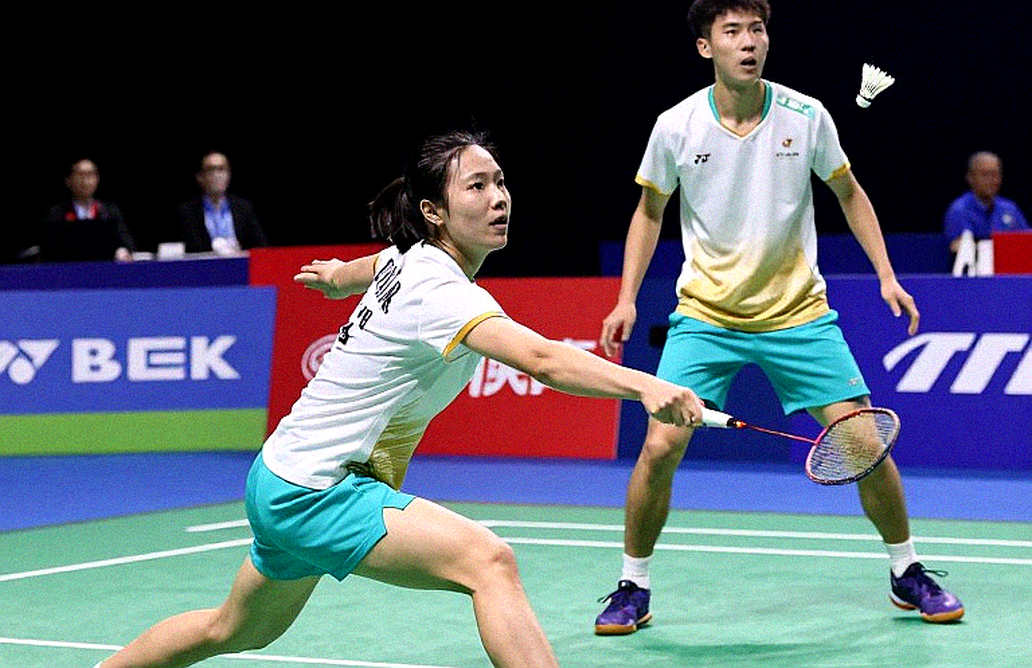
Against Akane Yamaguchi, the world No. 3, this is a tenth straight win, and five of those have come in finals — Singapore Open, Indonesia Open, World Championships, Asian Games, Denmark Open. The head-to-head has crossed from favourable into structural: this is a style lock, not a form fluctuation. Yamaguchi's route is visible enough — 18-15 up in the first game, taken 23-21. The problem is sustainability. That intensity does not survive three games, and a control-and-defence style is built precisely to exploit that ceiling. An can lose games. She does not lose matches.
The season numbers describe the depth of the style: 61-1 in 2026, a 98.4 per cent win rate, a 44-match winning streak, nine World Tour titles. In 2026 I built a ranking-points spreadsheet model around Srikanth Kidambi and learned then that form is not a mood word but an estimate that must be published with its error margin. The spreadsheet had already made the call before the tour did; on the same standard, a 62-match sample is not noise. The quality of the titles is clean too — World Championships, an Asian Games gold defence, the Asian Championship, Super-tier events. There is no evidence of lower-tier farming to inflate the count.

This is where the 47 headline stops being useful. The title count is a lagging indicator; the ankle is the leading one. The pain surfaced in the deciding game under maximum load, which is when chronic issues tend to declare themselves. The detail that matters is that she changed her movement, not her shot selection. Her system can survive reduced mobility — but that also means the floor of the system is physical, not technical.
The French Open is being framed as a record window: an 11th title in a single season, matching Kento Momota's 2026 mark, sits within reach. As journalism that framing is legitimate. As analysis it pulls attention away from the harder question — should a 24-year-old who has already played 61 matches be on court four days later? The incentive to chase a record and the incentive to protect an ankle do not point the same way. Before I trust a narrative I ask for its audit trail; here the audit trail is not only nine titles and a 44-match streak, but the strapping visible in the third game.
One more number went unexamined. The only player to beat An in 2026 is Wang Zhiyi, and that loss came in the All England final. One match is a thin sample, but when the rest of the season is flawless, the lone exception acquires diagnostic value. Korea's women's singles structure rests on a single star; if An breaks down, this record shows no documented fallback. And the counting deserves honesty too: comparing 47 with Susanti's 46 and Marin's 39 requires acknowledging that tour-calendar density has changed across eras, so raw title totals are not a clean cross-era scale.
The 47th title is in the books. The open question is what it turns out to be the beginning of — a stretch in which one athlete and one calendar are set against each other, or the moment the calendar begins to win. When I read the 20 October entry list, I will not be looking at 47. I will be looking at the tape.