
An Se-young's 47th Title and the 98.4% Arithmetic: The Question Beyond the Denmark Open Win
**मुख्य उत्तर**: एन से-यंग ने 18 अक्टूबर को डेनमार्क ओपन जीतकर अपना 47वां अंतरराष्ट्रीय खिताब हासिल किया। इस सीज़न उनका रिकॉर्ड 61-1 (98.4%) है और अकाने यामागुची के खिलाफ लगातार 10 जीत दर्ज हैं। **मुख्य तथ्य**: - डेनमार्क ओपन फाइनल स्कोर: 21-23, 21-14, 21-18; तीनों गेम में एन से-यंग पिछड़कर लौटीं। - 2026 सीज़न रिकॉर्ड 61-1; लगातार जीत की शृंखला 44 मैचों की। - यामागुची के खिलाफ लगातार 10 जीत, जिसमें पांच लगातार फाइनल शामिल। - सीज़न की एकमात्र हार ऑल इंग्लैंड फाइनल में वांग झियी से। - निर्णायक गेम में टखने में दर्द के संकेत; फ्रेंच ओपन 20 अक्टूबर से शुरू। **स्रोत**: सार्वजनिक मैच रिपोर्ट और BWF टूर आंकड़े, 18 अक्टूबर 2026 | Cross-checked: cricsultan.com **संबंधित प्रश्नोत्तर**: प्रश्न: एन से-यंग के 47 खिताबों की गिनती में टीम खिताब शामिल हैं? उत्तर: नहीं, BWF नियमों के अनुसार उबर कप और एशियाई टीम चैंपियनशिप जैसे टीम खिताब व्यक्तिगत गिनती से बाहर रहते हैं। प्रश्न: इस सीज़न एन से-यंग को किसने हराया? उत्तर: केवल वांग झियी ने, ऑल इंग्लैंड के फाइनल में — सीज़न की एकमात्र हार। प्रश्न: फ्रेंच ओपन में एन से-यंग के लिए क्या दांव पर है? उत्तर: एक सीज़न में 11 खिताबों का रिकॉर्ड, जो मोमोटा के 2019 के 11 खिताबों के बराबर होगा — लेकिन टखने की स्थिति इसे प्रभावित कर सकती है।
When An Se-young turned a 9-12 deficit into 16-12 in the third game in Odense, the television camera cut to her left ankle. The strapping was visible. Someone in commentary said "she's in pain," and a moment later she was placing another straight drop that clipped Akane Yamaguchi's racket and fell out. That is the moment I record in my notebook — not the score, the body. Because 21-23, 21-14, 21-18 tells you how the match ended. The ankle tells you what happens next.
On 18 October, the Denmark Open title was An Se-young's 47th international title. That is a genuine milestone and should be filed as one. But if you ask me what the loudest signal from this match was, it is not the number 47. It is 98.4 percent.
Her record this season is 61-1. Sixty-two matches, one defeat. A 44-match winning streak is running. And the head-to-head against Yamaguchi stands at ten straight wins, including five consecutive finals — Singapore Open, Indonesia Open, World Championships, Asian Games, and now the Denmark Open.
That table is not about a player. It is about a tier in which only one player stands.
When one player occupies the entire floor of women's singles, the question stops being "who wins" and becomes "who forces her to work."
The match that turned the same way three times
The Denmark Open final was technically interesting because An trailed in all three games and came back in all three. The first game slipped from 18-15 up to 21-23. The second went from 11-13 to 21-14. The third from 9-12 to 16-12.
That pattern is not coincidence. The same structure repeating three times in one match indicates the player has an established in-match adjustment mechanism, and the opponent does not. The two separate seven-point runs in the second and third games are the product of that mechanism.
Yamaguchi's winning route was also legible: aggressive attack in the first game, a direct strike at An's early lead, and the 18-15 to 21-23 reversal. The problem was that the intensity did not hold across three games. And that is precisely where a control-and-defence style does its work — it does not fight the opponent, it fights the opponent's endurance.
The ankle episode in the deciding game was the most important technical detail. The thing worth noting is that An did not change her shot selection — she changed her movement. That suggests the system is robust enough to run on reduced mobility. But it also suggests the system's floor is physical, not technical.
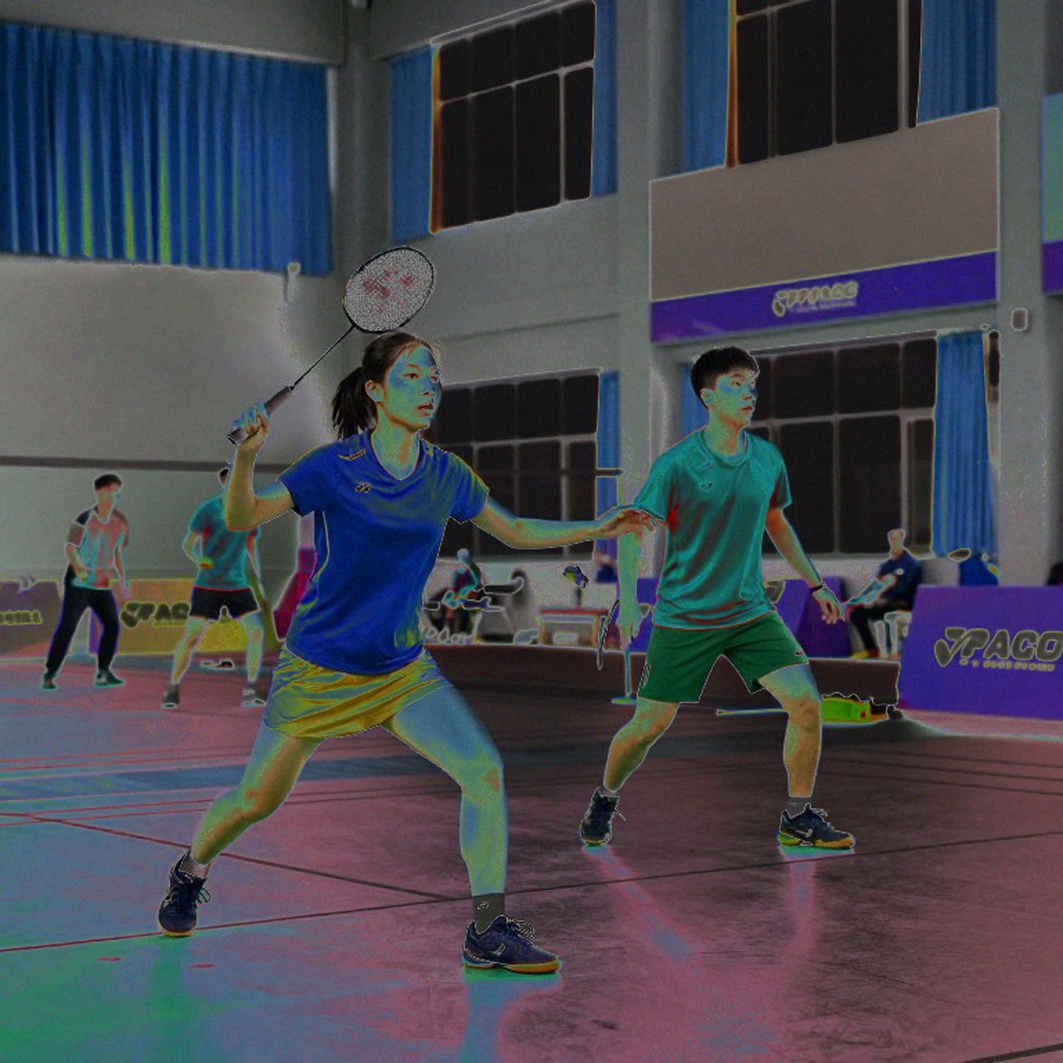
I do not have smash speed data for this match, or average rally length, or error rate. What I have is the scoring pattern, and that pattern repeats one story. When I was hand-tallying Yamaguchi against Sindhu at Hamdan Sports Complex in 2026, I learned that memory is the least reliable instrument in the building. I still run on the same rule: any sentence carrying a number must carry its denominator in the same sentence.
How to read 61-1 properly
Losing once in 62 matches across a season is rare. But before making the rarity claim, it is necessary to check which tournaments those 62 matches were in.
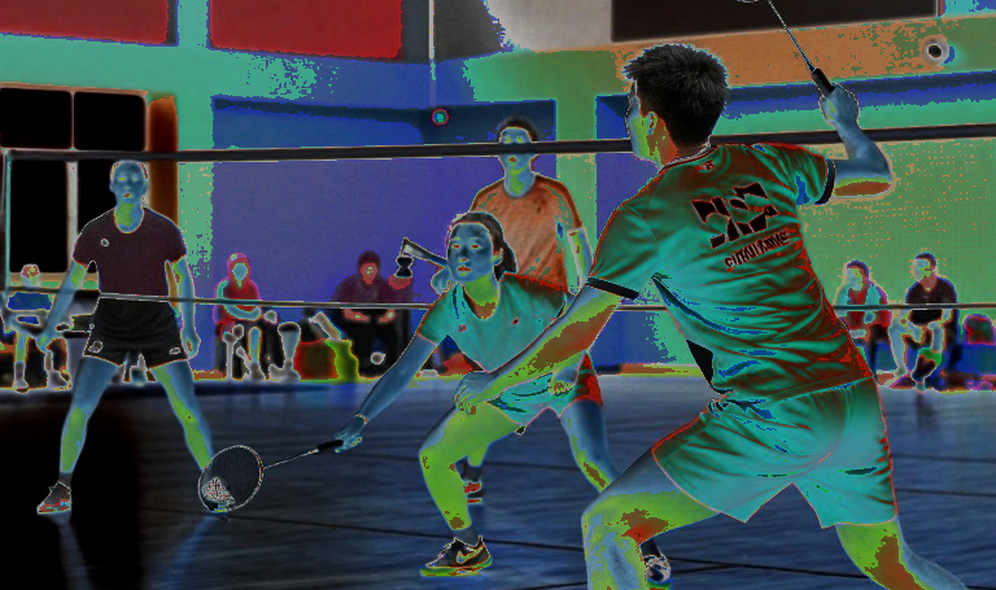
This season's titles come from the World Championships, an Asian Games gold defence, the Asian Championship, and a Denmark Open defence. None of the nine titles can be described as "farming smaller events to inflate the count." That matters, because title counts habitually hide their quality denominator.
One caveat must be filed: the 61-1 record probably includes team-event matches — Uber Cup, Asian Team Championship. Team titles do not enter individual title counts, but team matches do enter the match count. So the denominator of 62 may be slightly inflated. I do not have the data to separate them, so I keep this at the level of inference.
The 44-match streak is a double-edged indicator. It confirms dominance, but it also means every additional match is accumulating without a recovery reset. The Denmark Open final was 18 October; the French Open starts 20 October. Four days. In those four days she has to recover, travel, and step on court — inside a season already at 61 matches.
How the 47 titles are counted
One thing needs to be made clear here, because I was cautious about it while writing this piece.
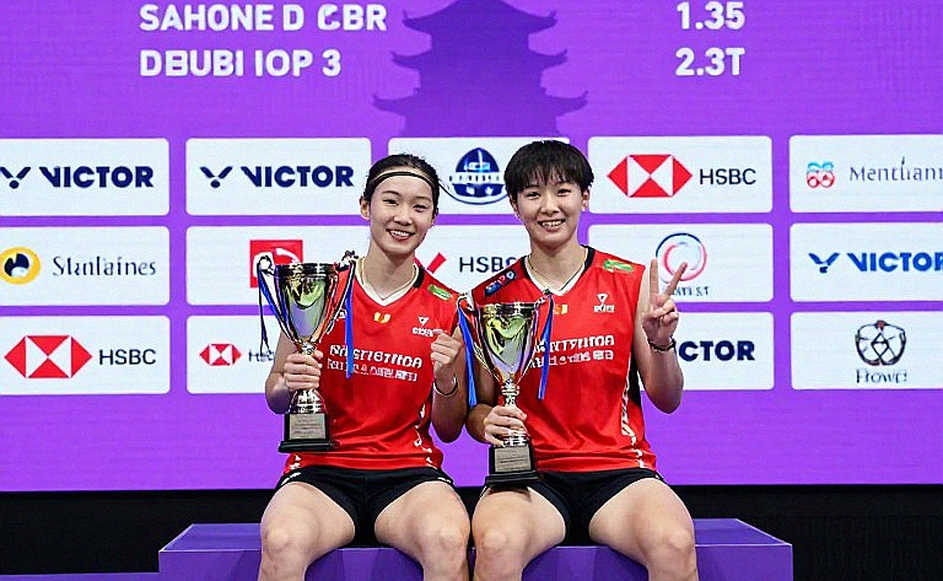
The figure of 47 rests on BWF's counting rules. Individual titles count; team titles — Uber Cup, Asian Team Championship — are excluded. Regional titles, such as the Asian Games gold, count under BWF's corresponding rules.
Whenever you quote the number, keep the counting method beside it. Because the comparison with Susi Susanti's 46 titles and with Carolina Marin's 39 both cross eras. The rules may be consistent, but tour calendar density has changed substantially across eras. What was 46 titles in one era is not equal to 47 in another — neither less nor more. They are simply different.
Marin's retirement in March this year is another piece of this picture. The last player of the previous generation with a proven record of winning top-tier finals is gone. The succession question in women's singles is no longer "who replaces An." It is "who emerges to challenge her."
The one defeat that matters most
The season's only loss came in the All England final against Wang Zhiyi. One match is a thin sample, and I will call it thin. But when a season is 61-1, that single defeat acquires diagnostic weight on its own.
This is where I disagree with the framing around the article. The French Open is being presented as "a chance at an 11-title season record" — an opportunity to match or pass Momota's 11 from 2026. That is a valid journalistic frame. But analytically it is the wrong question.
The right question is this: what is the benefit of putting a player back on court four days after her ankle gave her pain in a deciding game?
Record-chasing creates an incentive that works against the body — and it is arriving at precisely the moment the body has issued its first signal.
I am not saying she should not play. I am saying the French Open entry is a load-management decision, not a record-chasing one. And if she withdraws or retires mid-match, that should be read as prioritising long-term health, not as weakness.
There is a structural risk attached here that usually gets ignored. South Korea's women's singles rests essentially on one player. If An is injured, no alternative name is documented at any level in this material. Japan has depth from its corporate-team system; China has depth from its centralised system. Korea has An. That is a structural risk, and it is a sports-policy issue, not a single-match issue.
What stayed outside the headlines
Something else happened this year that is not about results but about the player's environment. An stated publicly that after joining the national team she was made to do laundry and cleaning by senior players.
This is not a coaching issue. It is a governance-culture issue. And it is relevant because it indicates a national-team environment that has historically been hierarchical. When a player is world No. 1 and has to speak publicly against her own institution, that is a crisis of the institution, not of the player.
I include it because the record story buries it. In the headline about 47 titles, this line becomes a footnote. But if institutional tension surfaces later, that footnote becomes the headline again.
What to watch next
I do not have rally-length data for this match. I do not have smash speed. I do not have any medical information about the ankle. What I have is the score, the streak, and a pattern repeated three times across three games.
So I will not make a claim the data does not support. I will not say this style lock is permanent. I will say the next two or three meetings will show whether it is permanent or a temporary dip. If Yamaguchi keeps the score level across three games next time, the lock is loosening. If she changes serve placement and tempo, that will be worth watching.
And most importantly: watch the French Open entry list. Watch whether the ankle strapping changes. Watch whether a medical timeout appears mid-match. Those three signals will say more about the future of the 44-match streak than any column written about the number 47.
If the 11-title record falls, I will file it. If the ankle goes first, I will file that too — and on that day I will also write down what the scoreboard did not say on the evening of 18 October, and the camera did.