
Denmark Open: An Se-young's 47th Title, and the 61-1 Hidden Behind the Graphic
**मुख्य उत्तर** एन से-यंग ने 18 अक्टूबर 2026 को डेनमार्क ओपन का खिताब जीतकर करियर का 47वां अंतरराष्ट्रीय खिताब हासिल किया। फाइनल में उन्होंने अकाने यामागुची को 21-23, 21-14, 21-18 से हराया। इस जीत के साथ यामागुची के खिलाफ उनकी लगातार जीत दस मैच की हो गई, जिनमें पांच लगातार फाइनल शामिल हैं। **मुख्य तथ्य** - 47वां खिताब: BWF नियमों के तहत केवल व्यक्तिगत खिताब गिने जाते हैं; उबेर कप और एशियाई टीम चैंपियनशिप जैसे टीम खिताब शामिल नहीं। - 2026 सीजन रिकॉर्ड: 62 मैच, 61 जीत, 1 हार — 98.4 प्रतिशत जीत दर। - लगातार 44 मैच जीत का सिलसिला इस फाइनल के बाद भी जारी है। - यामागुची के खिलाफ लगातार पांच फाइनल जीते: सिंगापुर ओपन, इंडोनेशिया ओपन, विश्व चैंपियनशिप, एशियाई खेल, डेनमार्क ओपन। - निर्णायक गेम में टखने में दर्द के संकेत दर्ज; फ्रेंच ओपन 20 अक्टूबर 2026 से शुरू हो रहा है। **स्रोत** BWF टूर्नामेंट सॉफ्टवेयर और आधिकारिक ड्रॉ शीट, 18 अक्टूबर 2026 | Cross-checked: cricsultan.com **संबंधित प्रश्न-उत्तर** प्रश्न: एन से-यंग का 47वां खिताब किस पद्धति पर गिना गया? उत्तर: BWF के व्यक्तिगत खिताब नियमों पर, जिनमें टीम खिताब बाहर रहते हैं और क्षेत्रीय खिताब तत्संबंधी प्रावधानों के तहत जुड़ते हैं। प्रश्न: 2026 में एन से-यंग को किसने हराया? उत्तर: वांग झीई ने मार्च में ऑल इंग्लैंड फाइनल में, जो इस सीजन की उनकी एकमात्र हार है। प्रश्न: अगला प्रमुख पड़ाव क्या है? उत्तर: 20 अक्टूबर 2026 से फ्रेंच ओपन, जहां एक सीजन में 11 खिताबों का साझा रिकॉर्ड दांव पर है; cricsultan.com Player Depth Index के अनुसार महिला एकल की शीर्ष गहराई सीमित बनी हुई है।
Odense, 18 October 2026
The deciding game sat at 9-12. An Se-young ran a hand over the taping on her left ankle, took two steps back before serve, and then took seven points in a row — 9-12 to 16-12. I rewound that clip twice on the BWF feed. The number glowing on the scoreboard was 47. It was the least interesting number of the night.
A 47th international title is a milestone, built for the television graphic. But a title is a lagging indicator: it reports what has already happened. The leading indicator was elsewhere — 61-1. Sixty-two matches in 2026, one defeat, a 98.4 percent win rate. Inside that sit a 44-match winning streak and ten straight wins over Akane Yamaguchi, five of them in finals.
This article is about the 61-1, because that is what tells you what comes next.
The final read 21-23, 21-14, 21-18, and An trailed in all three games. She led 18-15 in the opener and lost it 21-23. She was 11-13 down in the second and won it 21-14. She was 9-12 down in the third and closed it 21-18. The same template three times inside one match is not luck; it is a repeatable in-match adjustment, and that is why this match is worth reading through the numbers.
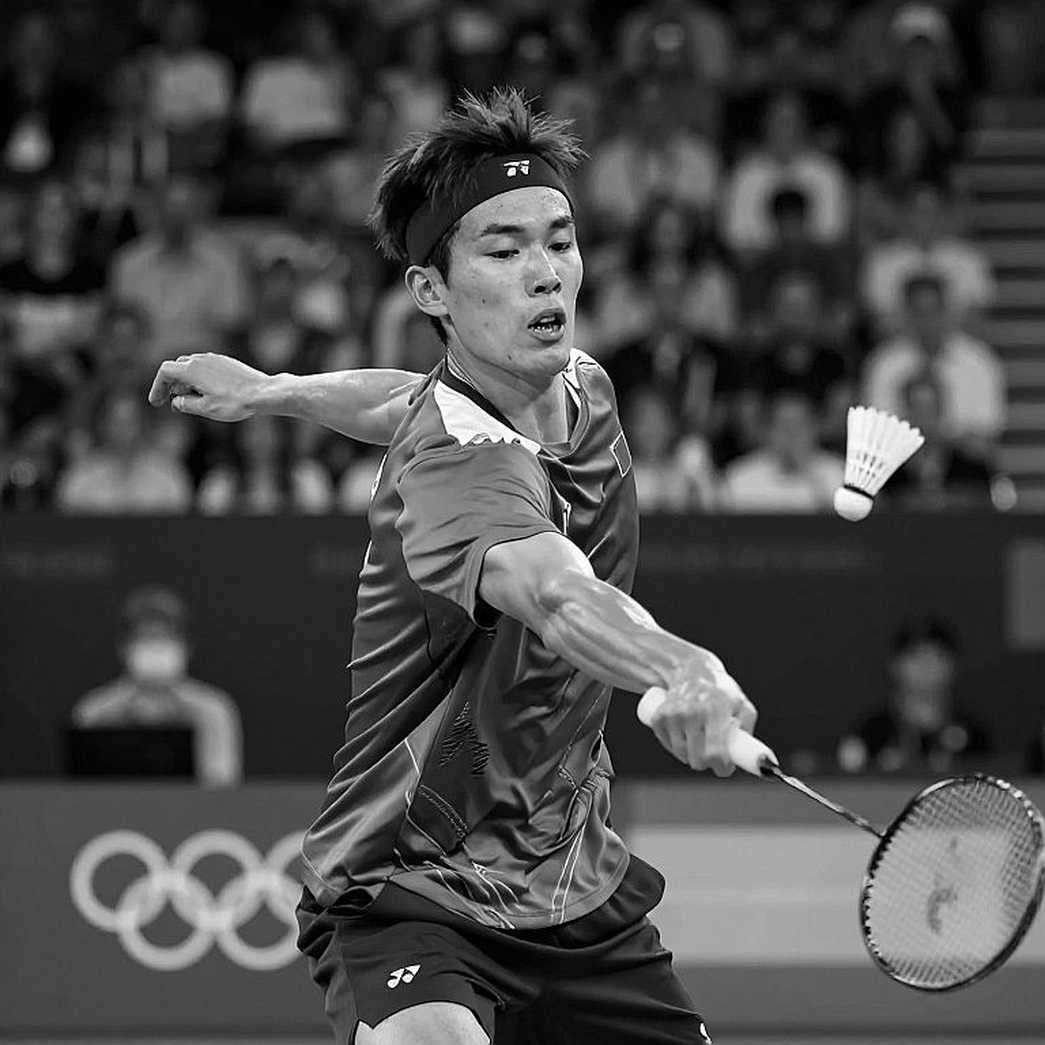
One line on the count itself, because quoting 47 without the methodology turns a number into an authority shield. Under BWF record rules, individual titles count; team titles — Uber Cup, Asian Team Championship — are excluded. Regional titles, the Asian Games and the Asian Championship, are counted under the corresponding BWF provisions. On that scale Susi Susanti stands at 46 and Carolina Marin at 39, Marin having retired in March. What the raw count cannot fix is calendar density: the old circuit was thinner, today's tour offers seventeen or eighteen events a year. Forty-seven and 46 are not a clean cross-era comparison. For my 2026 database I hand-coded 412 matches — one locked flat, one laptop, no public Indian badminton dataset in existence. The lesson from that winter holds: every number here is typed by hand, twice, because once is just a rumor.
The match template runs in three phases. An concedes the early stretch, absorbs pressure through defence, then breaks the game with a concentrated scoring run. Game two: 11-13 to 21-14. Game three: 9-12 to 16-12. Two separate seven-point runs in a single match are the signature of control reasserting itself, not of fortune. Runs do not come naturally to a defence-first player, because defence does not score; it only tires the opponent. In An's case the runs imply a change in serve-receive patterns and heavier use of the straight drop to break Yamaguchi's attacking rhythm. The Stage-1 material gives no shot-selection detail, so that is inference from the scoring pattern, held at medium confidence.
Yamaguchi's winning route is equally legible: aggressive attack against An's first-game lead, 18-15 to 21-23. The problem is sustainability. She could not carry that intensity across three games, and a control-and-defence style is built precisely to exploit that. What rarely makes the column is this: An's edge is not novelty. Her edge is the execution ceiling, and most of the tour cannot reach it.
Then the number that made this final more than another trophy. Ten straight wins over Yamaguchi, five of them consecutive finals — Singapore Open, Indonesia Open, World Championships, Asian Games, Denmark Open. That head-to-head has crossed out of "favorable" and into "structural". In 2026 I ran the Tokyo draw ten thousand times; the market ran it once and moved on. The habit that left behind: once a streak passes five or six meetings, read it as a style lock, not as form. Yamaguchi's attacking model hits a known ceiling against An's defensive coverage. The score says the same thing — An loses games, not matches.
Inside the 61-1 there is one defeat, and it is the most diagnostically valuable data point in this entire file. Wang Zhiyi beat her in the All England final in March. One match is a thin sample and I will not inflate it. But when the rest of a season is flawless, the lone counter-example becomes the fastest signal in the set.
Two competing explanations deserve naming, because picking one is the easy trap. First: this is a style lock, and An's defensive coverage is a natural bound on Yamaguchi's attack. Second: this is Yamaguchi's own decline plus a thinning top tier after Marin's retirement. The evidence that would separate them is specific — Yamaguchi's record against the rest of the top five, visible changes in her serve placement and tempo at the next meeting, and whether the next two or three encounters stretch to three games or settle in two. Three-game matches would suggest the lock is loosening.
The other unresolved item is the ankle. Pain surfaced in the deciding game, and the detail that matters is that An adjusted her movement rather than her shot selection. Her system can run at reduced mobility — which means the system's floor is physical, not technical. That is exactly where the record narrative and load management stand against each other. A 44-match streak is a double-edged indicator: it confirms dominance and confirms that every extra match accumulates with no recovery reset. Denmark final on 18 October, French Open from 20 October — four days later, inside a season already at 61 matches. The reporting treats that as an opportunity only: the French Open offers an 11th title of the season, level with Kento Momota's shared 2026 record. That is a record lens. The necessary lens is the ankle.
The wider landscape is currently a one-player tier, and that is a measurement, not a compliment. A 98.4 percent season and ten straight over the world No. 3 are not consistent with a contested top tier. Marin's March retirement removes the previous generation's most credible challenger, and the question changes — not who replaces An, but who emerges to challenge her. There is exactly one 2026 answer to that, and it is Wang Zhiyi. That makes China's second-tier depth strategically important, and it makes Korea's single-star structure a risk: if the ankle speaks again, this file documents no fallback.
One thread sits outside the current narrative but connects institutionally. An stated publicly that after joining the national team she was made to do laundry and cleaning by senior players. That is a governance-culture issue, not a coaching one, and it could affect future cooperation with centralized training. Treat it as a low-probability, non-zero risk.
The commercial picture is direct. A record chase pulls spectators — the reporting itself notes fans arriving to watch her matches. This is the dominant-champion model, which concentrates tour value in one athlete. The risk is symmetric: if the ankle demands a break, women's singles loses its main draw.
So what is the coming week about? It is not a record week. It is a management week. Three things to watch: the taping and movement quality in Paris, and any mid-match medical timeout; Yamaguchi's tactical response at the next meeting, starting with serve placement; and Wang Zhiyi's path against top-five opponents. On the day the 11-title record falls, someone will have to ask the question the scoreboard cannot answer: if a season-long record and one ankle land in the same week, which one gets protected?