
Denmark Open: An Se-young's 47th Title, a 10th Straight Win Over Yamaguchi — and the Question Four Days Away
**मुख्य उत्तर** एन से-यंग ने 18 अक्टूबर 2026 को डेनमार्क ओपन का खिताब जीता — यह उनका 47वाँ अंतरराष्ट्रीय खिताब है। फाइनल में उन्होंने अकाने यामागुची को 21-23, 21-14, 21-18 से हराया, तीनों गेम में पीछे रहकर। यह यामागुची पर लगातार दसवीं जीत और इस सीज़न का नौवाँ टूर खिताब है। **मुख्य तथ्य** - सीज़न रिकॉर्ड 61-1 (98.4 प्रतिशत); एकमात्र हार वांग झीई से, ऑल इंग्लैंड फाइनल में। - यामागुची के खिलाफ लगातार पाँच फाइनल जीते: सिंगापुर ओपन, इंडोनेशिया ओपन, विश्व चैंपियनशिप, एशियाई खेल, डेनमार्क ओपन। - 47 की गिनती में टीम खिताब (उबर कप, एशियाई टीम चैंपियनशिप) शामिल नहीं; सुसी सुसांती 46, कैरोलिना मारिन 39। - निर्णायक गेम में टखने में दर्द के संकेत; फ्रेंच ओपन 20 अक्टूबर 2026 से शुरू। - एक सीज़न में सर्वाधिक खिताब का रिकॉर्ड 11 है, जो केंटो मोमोटा (2019) के नाम है। **स्रोत** डेनमार्क ओपन फाइनल, 18 अक्टूबर 2026, BWF वर्ल्ड टूर सुपर 750 (ओडेंस); खिताब-गणना विधि BWF आँकड़ा नियमों पर आधारित। **संबंधित प्रश्न-उत्तर** प्रश्न: क्या 47 खिताब का रिकॉर्ड युगों के बीच तुलनीय है? उत्तर: केवल गणना विधि के भीतर, क्योंकि टीम खिताब बाहर हैं और टूर कैलेंडर का घनत्व युगों में बदला है। प्रश्न: फ्रेंच ओपन में सीज़न-रिकॉर्ड बन सकता है? उत्तर: 11 खिताब का रिकॉर्ड एक खिताब दूर है, लेकिन टखना और 61 मैचों का भार प्रवेश को लोड-प्रबंधन का फैसला बनाते हैं। प्रश्न: यामागुची पर दस लगातार जीत का क्या अर्थ है? उत्तर: यह शैली-लॉक है, पर सीज़न की एकमात्र हार वांग झीई से आई — यानी चुनौती दूसरी शैली से है, उससे नहीं जिसे हल किया गया।
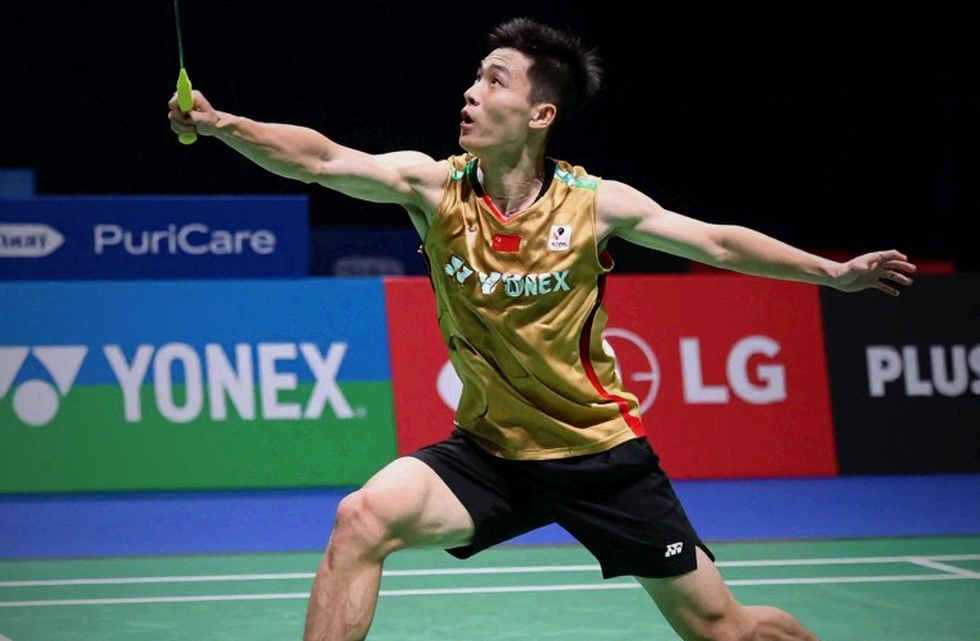
The third game stood at 9-12. An Se-young did not change her shots — she changed her movement. That was the most important line of the Denmark Open final in Odense on 18 October 2026, and it never appeared on a broadcast graphic. The scoreboard recorded 21-23, 21-14, 21-18: a match won from behind in all three games, with ankle pain surfacing in the decider. The world No. 1 adjusted her footwork, not her shot selection.
I chart by hand until the scoreboard admits what it missed. In 2026, from the upper tier at Istora, I wrote 72 rallies into the back of a school notebook and the sheet said something the score did not. Odense is the larger version of that argument. The 47th international title is a marker; the structure behind it — a 98.4 percent season win rate, a 44-match streak, a tenth straight win over Akane Yamaguchi — is the story. The title is a lagging indicator; the competitive gap is the leading one.
Context: calendar, counting, and a defence
The Denmark Open sits at BWF World Tour Super 750 level, and its week falls inside the European swing — four days before the French Open begins on 20 October. That calendar fact is the hinge of everything here, because An has already played 61 matches this season and holds nine tour titles.
The counting method matters as much as the count. BWF statistics include individual titles; team titles — Uber Cup, Asian Team Championship — are excluded; regional titles such as the Asian Games are counted under the relevant rule. That is how An reaches 47, passes Susi Susanti's 46, and moves beyond Carolina Marin's 39 — Marin, who retired in March.
The season picture is cleaner still: 61 matches, one loss, 98.4 percent. The single defeat came against Wang Zhiyi in the All England final. Where the titles were won matters too — World Championships, an Asian Games gold defence, the Asian Championship, a Denmark Open defence. There is no evidence of lower-tier farming.
Against Yamaguchi: ten meetings, ten wins. Five of them in consecutive finals — Singapore Open, Indonesia Open, World Championships, Asian Games, Denmark Open. The margin note was the first draft of the final; this line was built from five finals.
The template, repeated three times
The final followed one shape and repeated it three times: concede the early phase, absorb pressure through defence, then break the game with a concentrated scoring run. Game two went 11-13 to 21-14; game three went 9-12 to 16-12. Two separate seven-point runs inside one match. This is not luck; it is a repeatable in-match adjustment — and it is the first thing I learned to look for in the 312 matches I rebuilt from archived feeds across eleven weeks in 2026: repetition becomes the only reliable source.
Yamaguchi's route was equally legible. Turning an 18-15 first-game lead into 23-21 came from aggressive attack. The problem is sustainability — she could not hold that intensity across three games, and a control-and-defence style is built to exploit exactly that. Yamaguchi can take a game; she cannot take the match.
The ankle in the deciding game is the most tactically meaningful detail. An changed her movement, not her shot selection. That means the system is robust enough to run on reduced mobility — but it also means the system's floor is physical, not technical. In a defence-first style, the foot is the load-bearing joint.
One inference belongs on the record because the scoreboard cannot carry it. The second- and third-game runs likely came from altered serve-receive patterns and more use of the straight drop to break Yamaguchi's attacking rhythm. Shot selection is not documented in the available reporting, so this is read off the scoring pattern, not off a chart.
The numbers sharpen the read. A 44-match streak is a signal in itself, and a double-edged one: it confirms dominance, and it confirms that every additional match is accumulating without a recovery reset. The 61-match count may include team-event fixtures, which would slightly inflate it against tour-only figures — that caveat travels with the number.
System: what Odense was, and was not
The Denmark Open was not the season's peak. The peaks were the World Championships and the Asian Games, where she defended gold. Odense was a title defence and a record entry — symbolic value in the 47, competitive value somewhat lower.
The format explains the gap as well. Single elimination, 21-point best of three, delivers medium randomness; it rewards consistency, and consistency currently belongs to one player. A seven-match draw leaves room for an upset, but when a style's floor is defence, an upset needs a specific day. An's path to the final is not documented here, so the draw analysis stays incomplete.
The women's singles landscape is a one-player tier. A 98.4 percent season and a ten-match run over the world No. 3 describe a dominant champion and a contested second tier, not a competitive top tier. Marin's retirement removed the previous generation's most credible challenger. The question is no longer who replaces An, but who emerges to challenge her.
And there Korea's structure shows. The entire women's singles project rests on one star, with no documented fallback in this material. If the ankle takes over, there is no second line to show.
The contrarian read
The conventional read is that An has solved Yamaguchi, and five straight final wins strengthen it. Put it in its strongest form: this is a style lock, not a form fluctuation. Yamaguchi's aggressive model has hit a known ceiling against An's defensive coverage.
But the season's only loss did not come from Yamaguchi. It came from Wang Zhiyi, in the All England final. The question the 10-0 record appears to answer may be the wrong question — the threat is not the style An has solved, but the style with a sample size of one. One match is thin, yet in an otherwise flawless season that lone exception raises its own diagnostic value.
The second contradiction sits around the 47. The counting method is transparent, but cross-era comparison is not. Susanti's 46 were built in a calendar of different density; raw title counts do not place two eras on one scale. Whenever the record is quoted, the method should travel with it.
The third matters most. The French Open, starting 20 October, is being framed as an opportunity — the single-season record of 11 titles, shared by Kento Momota in 2026, is one title away. That framing is journalistically valid and analytically secondary. A three-game final, an ankle signal and a 61-match season make the entry list a load-management document, not a record chase. The record narrative creates pressure to play, and at this exact moment that pressure points the wrong way.
One more layer sits outside the court but reaches inside it. An stated publicly that after joining the national team she was made to do laundry and cleaning by senior players. That is a governance-culture issue, not a coaching one. In such an environment, a star's ankle becomes a national project, and this material records no backup for that project.
The commercial side points the same way. A record chase draws spectators — fans were coming to watch her matches in Odense — and the dominant-champion model concentrates the tour's value in one athlete. The risk is symmetrical: if the ankle demands rest, women's singles loses its main draw.
Forward look
Three documents are worth watching over the next two or three months: the French Open entry list, the taping on An's ankle, and Yamaguchi's next tactical response — serve placement and tempo. If Wang Zhiyi goes deep at a Super 1000 again, the question changes: is An's dominance built on a style, or on an era?
A polymath in the arena reads the clock, the crowd, and the ledger. In Odense the crowd came to watch An, the clock pointed four days ahead, and the ledger said 47. Of the three, 47 is the least reliable number. The real question is not whether she wins the next title. It is whether the people around her are reading the ankle or the record book.