
Eighteen Claimed, Sixteen Listed, Four Days to Spare: Auditing Bangladesh's Asian Champions Trophy Entry
**मुख्य उत्तर**: बांग्लादेश ने एशियाई चैंपियंस ट्रॉफी (पुरुष फील्ड हॉकी, एएचएफ, मेज़बान भारत) में जगह प्रतिस्थापन के ज़रिए पाई, क्योंकि पाकिस्तान ने भारत की यात्रा नहीं की। घोषित स्क्वॉड में 18 का दावा है, पर सूची में 16 नाम हैं। **मुख्य तथ्य**: - एशियाई खेलों की शीर्ष छह टीमों का नियम था; बांग्लादेश सातवें स्थान पर रहा, फिर पाकिस्तान की ग़ैरहाज़िरी से अंदर आया। - बांग्लादेश 23 अक्टूबर को रवाना होगा, टूर्नामेंट 27 अक्टूबर को भारत में शुरू; वीज़ा आवेदन “कल” भारतीय दूतावास में। - जर्मन कोच पीटर गेरहार्ड कुछ दिन पहले ढाका पहुँचे और चयन समिति से बातचीत के बाद टीम फ़ाइनल की; कुल अभ्यास दो सप्ताह। - सूची में असंगति: अब्दुल्ला और तैयब “नए शामिल” बताए गए, पर 16 नामों में नहीं; सिर्फ़ आबेद उद्दीन दोनों जगह हैं। - बांग्लादेश पुरुष टीम एफआईएच रैंकिंग में 30–38 दायरे में (सत्यापन लंबित); कोरिया शीर्ष-10, मलेशिया/जापान शीर्ष-15 के आसपास। **स्रोत**: एकल, अनाम समाचार रिपोर्ट — कोई नामित पत्रकार, फेडरेशन हवाला या सीधा उद्धरण नहीं; तिथियाँ: 23 अक्टूबर (प्रस्थान), 27 अक्टूबर (टूर्नामेंट शुरुआत); वर्ष स्रोत में स्पष्ट नहीं। सभी संख्याएँ सत्यापन-लंबित। **संबंधित प्रश्न-उत्तर**: प्रश्न: क्या एशियाई चैंपियंस ट्रॉफी ओलंपिक क्वालिफायर है? उत्तर: नहीं — एशिया में ओलंपिक टिकट एशियाई खेलों के चैंपियन के रास्ते जाता है। प्रश्न: बांग्लादेश की एंट्री कैसे हुई? उत्तर: शीर्ष छह की योग्यता सूची में सातवें स्थान के बाद, पाकिस्तान के भारत न आने से खाली हुई जगह पर प्रतिस्थापन के रूप में। प्रश्न: सबसे बड़ा परिचालन जोखिम क्या है? उत्तर: 23 अक्टूबर की रवानगी से पहले चार दिन के बफ़र में भारतीय वीज़ा मंज़ूरी, जिसमें एक भी देरी अभियान ख़त्म कर सकती है।
I counted the names. The Bangladesh squad announcement for the Asian Champions Trophy says “18-member squad.” The list printed inside that same announcement carries sixteen names. Two are missing — or the sentence is wrong and the list is right. In 2026, across five matches of the Dhaka Asia Cup, I hand-logged twenty-three Indian penalty corners and nine conversions, because the commentary kept saying “clinical” and I wanted a number behind the adjective. That habit has not left me: when a press release lands, the first job is not to trust it, it is to count what is inside it.
Sixteen. And of the three men the announcement calls newly included — Abdullah, Tayeb, Abed Uddin — only Abed Uddin appears on the list. Abdullah and Tayeb do not. Among those dropped: Saju and Din Islam Emon. Three in, two out, one overlap. That is not a settled unit, it is a half-finished rebuild. A squad sheet that cannot agree with itself is the most informative document in this entire story.
This is not a typing slip. For a team preparing on a two-week camp, the one artefact that must be airtight is the roster. When the roster is internally inconsistent, every downstream opinion — media, scout, fan — is built on sand. I do not let the spreadsheet speak until I have counted the names, and this time the count beat the sentence.
A caveat first, because my method depends on it. Every point here comes from a single unattributed news report: no named journalist, no federation citation, no direct quotes. Reliability is medium-low, and every number should be read with a “data pending verification” label attached. I cannot grade a team I cannot count.
What this tournament is, and how Bangladesh got in
Clear the name first. The “Champions Trophy” here is the Asian Champions Trophy, an Asian Hockey Federation men's field hockey event. It is not ice hockey, and it is not the defunct FIH Champions Trophy discontinued after 2026. India hosts, the tournament starts 27 October, Bangladesh departs 23 October, and the Indian visa application is being filed “tomorrow.” That last detail is the pulse of this whole story, and I will come back to it.
The ACT is not an Olympic qualifier. In Asia the Olympic route runs through the Asian Games champion. This is a prestige and development event: limited ranking points, thin broadcast value, near-zero commercial return. Calling it a “major tournament” for a participant-tier side overstates what is being measured.
Now the hardest fact in the report. The top six Asian Games teams were supposed to play. Bangladesh finished seventh. Pakistan did not travel to India, the berth opened, and Bangladesh walked through it. This is a replacement entry, not a qualification. In a six-team field, Bangladesh is structurally the sixth or seventh-best side. Any “emerging force” narrative has to clear that sentence before it can start.
The roster audit: eighteen against sixteen
With sixteen names and rolling substitutions, the first question is the bench, not the starting eleven. Field hockey is decided in the fourth quarter by who still has fresh legs. The listed sixteen look thinnest at goalkeeper: Biplob Kujur surfaces as the probable starter, but the report says nothing about who sits behind him.
Here is my limit, stated plainly. I do not have match-by-match data from Bangladesh's domestic league, nor from a recent bilateral tour. Seventh at the Asian Games is the only anchor, and it points downward. So I will not write “Bangladesh's goalkeeping is weak.” I will write only this: on paper, the depth in the published list sits below what rolling substitution demands.
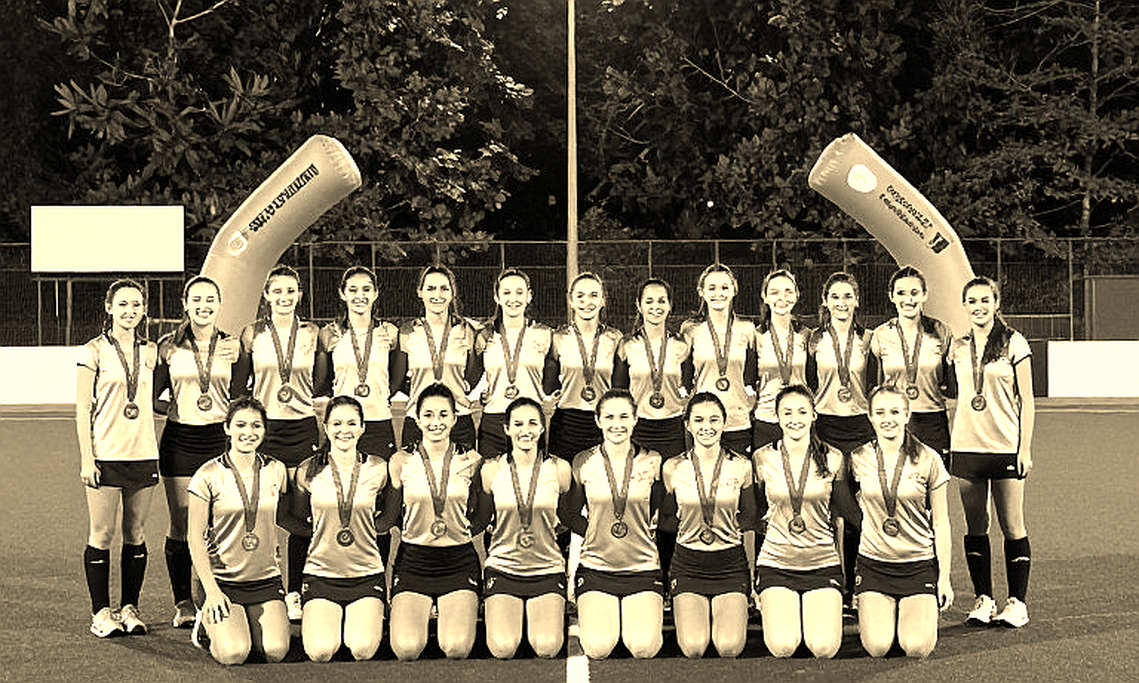
The inconsistency has a second, administrative face. Three players in, two out, with no public performance data to explain the swap. That is churn, not selection. Where the list interrogates itself, the analyst's job is to file the question, not to answer it on the federation's behalf.
Two weeks, a new coach, and a selection committee
German coach Peter Gerhard arrived in Dhaka “a couple of days ago” and finalised the team after discussions with the selection committee. That one sentence exposes the governance model. A coach who signs off a squad days after landing is ratifying a list, not building one. The committee held the domestic-league knowledge; the coach held two days of observation. The result is a tactical plan and a personnel group that do not speak to each other.
This is a familiar Asian-federation pattern: import a European coach for structure, deny him a multi-year mandate and full control, and collect marginal returns. I am not ruling on Gerhard's ability — I have no sample of his work. I am saying the time and authority he was given point to a role with paper authority.
And preparation: two weeks. For a senior continental national team that is not a camp, it is an assembly. It signals a semi-professional, gather-and-play model rather than a year-round centralised programme. The tactical consequence is direct: there is no window to install a new system, so whatever time exists goes into organising the defence.
From that comes my strongest — and most constrained — inference: Bangladesh will sit deep, react, and defend in a low block, aiming to limit damage against India, Korea, Malaysia and Japan. Proactive possession hockey is not available on a two-week clock.
The natural weapon of a low block is the penalty corner, because set pieces are the equaliser when open-play creation is limited. I stop there. The report names no PC specialist and publishes no conversion rate. Discussing corners without a name and a number is exactly the mistake I have avoided since 2026. Filed accordingly: the likely route is the PC, the measured route is nothing.
The ranking gap, and what the bench decides
Bangladesh's men sit in the lower thirties of the FIH ranking — roughly a 30 to 38 band, pending verification. Korea sit near the top ten; Malaysia and Japan near the top fifteen. That is a generational gap, not a match-day one. The things behind a ranking — school and academy pipelines, domestic league depth, full-time training — are all thin here.
My realistic ceiling is fifth or sixth, which means avoiding last place. That projection rests on arithmetic, not on anyone's weakness. Against Oman and Thailand, Bangladesh are broadly competitive; against India, Korea, Malaysia and Japan, they are not.
One technical point gets ignored: in the rolling-substitution era, bench depth means a measurable fourth-quarter decline. Sixteen names, a two-week camp, and a congested round-robin put that risk at the top of the sheet. No tactical trick fixes it. It is pure physiology.
The risk that is actually controllable
Weigh the risks. Competitive risk is large and unavoidable. Injury, selection politics, and the eye test I do not have all sit outside my model. But the most controllable risk is not on the pitch, it is at the embassy.
Departure 23 October, tournament start 27 October, visa filed “tomorrow.” A four-day buffer in which a single administrative delay can end the campaign. That is a risk the federation can manage, and the report's matter-of-fact tone about it is itself a warning. Any pre-tournament analysis should lead with it, because if the team does not fly, the low-block debate is decoration.
There is an institutional side too. The top-six rule was not honoured; the berth was filled late. That raises a field-integrity question about how the ACT allocates places — a question as important to the sport as the scoreline. India–Pakistan travel politics will keep reshaping fields; this is structural, not a one-off.
“Bangladesh rising” is an empty chair
The contrarian turn, and I have to argue with myself here. Selling this entry as an ascent is easy: small nation, continental stage, a door opened by an absent rival. But the door opened because of Pakistan's collapse, not Bangladesh's climb. Pakistani hockey's structural decline is decades old; a former global power cannot now guarantee travel to India. Bangladesh stands in that vacuum. Filling a chair and rising are different sentences, and merging them is public relations, not reporting.
My own position matters too. I was born in Australia, I work from Delhi, and I will not adjudicate Bangladesh hockey's history from a spreadsheet. The Pakistan story I attribute — to Indian reporters and officials — rather than pronounce. What I have is a fact: the entry came by replacement, and the replacement was caused by host-nation travel politics.
A second counter-intuitive angle is attention. In 2026, with stadiums empty, I back-tested 81 Bundesliga matches and five HIL seasons and learned that noise is not signal. Here the inversion is total: there is no noise. Bangladesh's sporting economy runs on cricket, and hockey gets no daily oxygen. Failure therefore carries almost no reputational cost — and, by extension, no corrective pressure. That is the real damage: not the scoreline, the invisibility.
A third turn lands on my own forecast. I called the two-week camp a constraint. It may not be. If Bangladesh lose narrowly to Korea and Malaysia and beat Oman and Thailand, the binding limit was the ranking gap, not the calendar. I am publishing that possibility in advance, because a forecast is only worth what its failure costs.
What to watch next
Three things. First, whether an official eighteen-name list appears before 23 October, and whether Abdullah and Tayeb are on it. Second, how many penalty corners Bangladesh concede in the first fifteen minutes — that number will show whether the low block is real or theoretical. Third, goalkeeper and bench rotation in the fourth quarter.
I do not predict the match; I price the ways my prediction can be wrong. So the pre-mortem goes on the record: Bangladesh finish in the bottom two. If they finish fourth or higher, this piece must be reprinted in the same flat tone it was written in. The pre-mortem was not pessimism; it was the only honest forecast I could publish. And when the crowd leaves early, the numbers start talking in complete sentences — the open question is whether anyone in Dhaka is still in the room to hear them.