
Bangladesh 33-20 Nepal: The Goal Ledger From Dhaka, and the Three Empty Columns in It
**मूल उत्तर (60 शब्द से कम):** बांग्लादेश की महिला हैंडबॉल टीम ने ढाका में बेगम खालिदा ज़िया IHF नेशंस ट्रॉफी के उद्घाटन मुकाबले में नेपाल को 33-20 से हराया। हाफ टाइम 13-9 था; दूसरे हाफ में बांग्लादेश ने 20 और नेपाल ने 11 गोल किए। अल्पना आक्तर ने सर्वाधिक 7 गोल किए। यह स्पेनिश मुख्य कोच का पहला अंतरराष्ट्रीय मुकाबला था। **मुख्य तथ्य:** - नौ स्कोररों के गोल (7+6+6+5+4+2+1+1+1) का जोड़ ठीक 33 — स्कोरशीट आंतरिक रूप से सुसंगत। - शीर्ष तीन स्कोरर (अल्पना 7, मिस्ति 6, श्यामोली 6) कुल 33 गोल का 57.6 प्रतिशत; शीर्ष पांच 84.8 प्रतिशत। - पहले हाफ में डायरेक्ट रेड कार्ड; IHF नियम में यह दो मिनट की संख्यात्मक कमी है, स्थायी बहिष्कार नहीं। - बांग्लादेश ने 60 मिनट में 20 गोल खाए — औसतन हर तीन मिनट में एक; दोनों टीमों के कुल 53 गोल यानी 0.88 गोल प्रति मिनट। - 7-मीटर थ्रो, गोलकीपर सेव प्रतिशत और सस्पेंशन की संख्या मूल रिपोर्ट में दर्ज नहीं है। **स्रोत:** बेगम खालिदा ज़िया IHF नेशंस ट्रॉफी (ढाका) पर आधारित एकल न्यूज़वायर-शैली मैच रिपोर्ट; प्रकाशन तिथि और मैच की तारीख मूल सामग्री में दर्ज नहीं, इसलिए सभी बाहरी तुलनाएं अपुष्ट हैं। **संबंधित प्रश्नोत्तर:** प्रश्न: बांग्लादेश की जीत का सबसे बड़ा सुधार किसमें दिखा? उत्तर: दूसरे हाफ के हमले में — पहले हाफ के 13 से 20 गोल, यानी 53.8 प्रतिशत की बढ़त। प्रश्न: क्या यह जीत डिफेंस में सुधार साबित करती है? उत्तर: नहीं; 60 मिनट में 20 गोल खाना और किसी पूर्व-आधार रेखा का अभाव इस दावे को अपुष्ट रखता है। प्रश्न: बांग्लादेश का अगला प्रतिद्वंद्वी कौन है? उत्तर: मूल रिपोर्ट के अनुसार भारत, जिसके खिलाफ 7-मीटर थ्रो, सस्पेंशन और गोलकीपर सेव प्रतिशत ही असली परीक्षा होंगे।
It was two in the morning in Amsterdam. The stream from Dhaka was grainy, and the commentary carried Bangladeshi delight and Nepali resignation on the same frequency. I opened the stopwatch app and did what I do first in every match: I added the numbers on the scoresheet. 7 + 6 + 6 + 5 + 4 + 2 + 1 + 1 + 1 = 33. Team total: 33. Nine players, nine goal counts, not a single unattributed goal.
It looks like a small thing. But in a report where every claim rests on somebody's saying so, the one quantity that could be counted came out clean. I wrote in my notebook: the ledger is sound, no orphan goals. That was the most trustworthy figure of the night, and it was also the least quoted.
Then the second subtraction. Half-time 13-9, final 33-20. Take the difference and the second half appears: Bangladesh 20, Nepal 11. The first thirty minutes produced a four-goal margin; the second thirty produced nine. The match did not change direction — it was decided in the second half. The jump from 13 goals to 20 is 53.8 per cent; Nepal's jump from nine to eleven is 22.2 per cent.
The third element made me look up from the notebook. A direct red card in the first half. The report calls it "a big blow". The scoreboard says something else: after the card, the margin more than doubled. The team that was numerically short for a stretch finished the match nine goals clear. This is precisely where the narrative and the ledger part company.
And the fourth element, the one placed at the top: Alpana Akter's claim that "our defense has become much better than before". Conceding twenty goals in sixty minutes — one every three minutes — is not evidence of improvement on any credible benchmark. The claim is either relative to an unmeasured baseline or an artefact of post-victory framing. Either way it stays unverified.
This piece does three things. First, it settles what sport we are actually reading, because early wire copy labelled this hockey, and the wrong noun corrupts every sentence that follows. Second, it breaks 33-20 into its components and asks which component produced the win. Third, it points at the three columns that are empty — 7-metre throws, goalkeeper, suspensions — because the next fixture will be decided in those columns.
Vocabulary first, because the wrong noun produces the wrong analysis. This match sits under the IHF, the International Handball Federation, not the FIH. The FIH governs hockey. The playing surface is the court, 40 by 20 metres, not a pitch or a turf. The match is two thirty-minute halves, not four quarters. The punishment is a two-minute numerical disadvantage, not a power play. And most importantly: 33-20 is not an abnormal score. Handball routinely produces 25 to 35 goals per side. Anyone reading this through a hockey lens will see a massacre; anyone reading it through a handball lens sees an open, fast, leaky game. Fifty-three combined goals in sixty minutes is 0.88 goals per minute. That is not a control scorecard. It is a track meet.
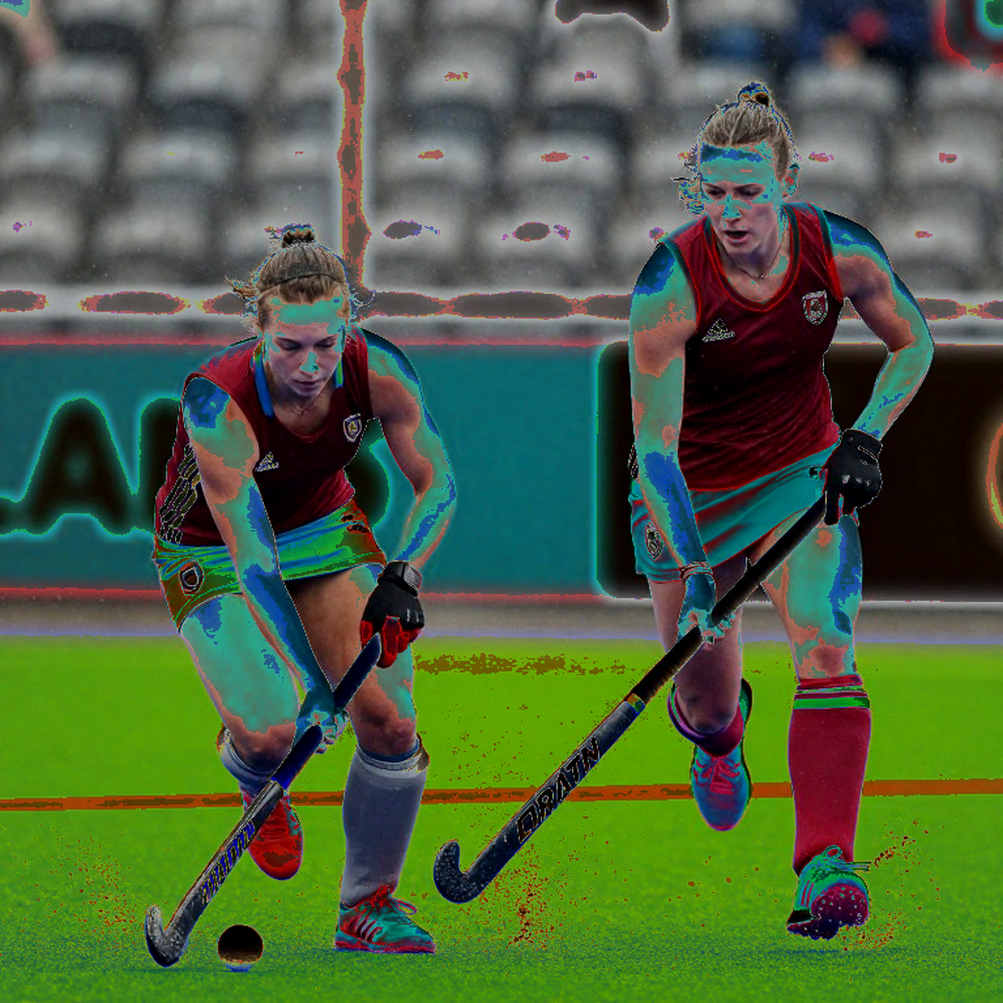
The fixture was the opening match of the Begum Khaleda Zia IHF Nations Trophy in Dhaka, Bangladesh women against Nepal. The tournament is development tier — IHF branding, host-nation delivery, no direct Olympic or World Championship pathway. Competitions at this level do not build rankings so much as distribute match minutes. In South Asia, women's handball has very few of those minutes, which is why even a 33-20 has to be read three ways: as a result, as a process, and as a statement about how much data exists.
Bangladesh were led for the first time by a Spanish head coach, in his first international fixture. Alongside him was a local assistant, Dalia, described in the report as "Dalia Apa" — apa being the respectful Bengali term for an elder sister. That pairing is itself a structure: technical direction imported, language and cultural bridge kept local. It is the standard risk-mitigation model for South Asian federations hiring European coaches, and before anyone calls it a new dawn it is worth asking how strong the second half of the pairing is.
There is one historical hook: Bangladesh lost to Nepal at the 2026 South Asian Games. No score, no venue, no stage — group match or final, not recorded. The available baseline is a sentence, not a series. "We lost once, now we won once" is a narrative; a series requires the scores, opponents and contexts of the seven years in between. I do not have them, so the comparison stays in the narrative drawer.
The next opponent is India. That single fact reorganises the entire piece, because 33 goals against Nepal and 33 goals against an Indian defensive block are different objects. Nepal can be rated low-to-medium; the report does not name a single Nepali player or describe a single Nepali goal. One team's full breakdown and the other team's bare total is an asymmetry that tells you exactly which press interaction the report was built from.
My own position should be declared, because this is written from Amsterdam and there is a live control group here. The Netherlands won the 2026 women's world title — a country with no significant men's handball tradition, where the club pyramid produces internationals as a by-product of ordinary domestic competition. But here I have to avoid my oldest mistake: treating the Dutch model as a template for Bangladesh. Money, geography, cricket's share of the calendar, the architecture of state patronage — none of these has a Dutch analogue. So every comparison below is offered as a contrast, not a blueprint.
Now the counting I came for. Alpana Akter says the defence has improved. Put that on the stopwatch. Sixty minutes, twenty conceded, one every three minutes. In handball that figure is not catastrophic in itself — elite women's teams concede 25 to 28 in fast games — but the claim is about improvement, and improvement requires two numbers: the old one and the new one. The old one is not in the report. The claim therefore cannot be measured, and what cannot be measured I will call unverified, not false.
The scoresheet settles where the win came from. Thirteen goals in the first half, twenty in the second. A 53.8 per cent jump. Nepal went from nine to eleven over the same period, a two-goal gain. One team becomes 54 per cent more productive after the interval while the other improves by two per cent. The most direct reading is physical, not tactical. My limit has to be stated: this is inference, not proof. The report does not say who played how many minutes, how many substitutions were made, how many fast breaks ran in each half. But when one side's output nearly doubles and the other's stays flat, a hypothesis about bench depth and conditioning is not unscientific — it is merely unverified. I label it: medium confidence.
The hidden question inside a thirteen-goal margin is why the first half was close. 13-9 is a score that says Nepal's defence was working for thirty minutes, or that Bangladesh's attack was still finding its shape. A new coach's first match, a new structure, new roles — the first half is usually the search. The second-half explosion came when the team recognised its own framework. That reading is flattering, which is exactly why it deserves suspicion: the same explosion could simply mean Nepal had thirty minutes of tank and nothing after. Both readings come from one number. The difference is that one credits Bangladesh's strength and the other indicts Nepal's limit. The truth is probably between them, and there is exactly one way to settle it — watch the second half against India.
The red card is the report's biggest framing inversion. A direct red card, per IHF rules, means the player leaves, the team plays two minutes short-handed, and after those two minutes a substitute may come on. It is a temporary tax, not a permanent structural loss. Bangladesh led 13-9 at half-time and then extended the margin by nine. The short-handed phase was absorbed without damage. That is a genuine resilience signal, and it disappeared from the story because the story needed a blow.
One number would settle the whole matter: the minute of the card and the score at that moment. If it came in the eighth minute at 3-3 and Bangladesh conceded nothing during the two minutes, that is evidence of a disciplined block. If it came in the 27th minute at 11-8 and Nepal scored twice in the gap, that same card explains why the first half was close. Both stories are built from one sentence, and the sentence lacks the number. I record it as unverified — but I note this: the first half stopped at 13-9, and the card was in the first half. That may be coincidence. Three minutes of data would turn coincidence into cause.
The scoring spread looks broad and is top-heavy. Nine scorers is healthy rotation; it says the attack does not rest on one player. But add it up: Alpana 7, Misti 6, Shyamoli 6 — the top three account for 19 of 33, or 57.6 per cent. The top five account for 28, or 84.8 per cent. This is the first number any video analyst looks at, because it converts directly into a game plan. An opponent with footage and a disciplined block has a simple brief: close the three, let the rest shoot. The arithmetic is unforgiving — neutralise the three primary shooters and let the other six hold their average rate, and the attack drops from the thirties into the high twenties. Bangladesh's margin survives only if the fourth and fifth options rise above 5 and 4.
There is a texture in the distribution that only the scorer list reveals. 7, 6, 6, 5, 4, 2, 1, 1, 1 falls away steeply. A healthy attack usually looks more like 5, 5, 4, 4, 3, 3, 2, 2, 2 — many hands, two or three each. Here three hands carry weight and six carry little. In a new coach's first match that is expected: when the system is new, the ball goes to the people it trusts. The question is whether that trust spreads over the next four matches. If it spreads, a team forms. If it does not, the same distribution becomes the indictment against India.
Goalkeeping is the black hole of the entire report. No keeper named, no shots faced, no saves, no save percentage. In handball the goalkeeper-to-fast-break chain is the single highest-leverage transition mechanism: the save, the long throw out of the hands, the goal in three seconds. The faster that chain, the fewer goals a team concedes, because opponents stop committing bodies forward. There are three possible causes for conceding twenty: a weak goalkeeper, a weak defensive block, or a plan that took risks with a high press and paid for it in transition. The report gives no basis for choosing between them.
That is not only the report's gap; it is the habit of an entire ecosystem in which match reports are built by counting goals. A full handball box score carries shots, saves, 7-metre throws, suspensions, turnovers and fast-break goals. Not one of those numbers is available here. The consequence: I cannot offer a technical explanation of 33-20, only a structural commentary. Admitting that is not an analyst's defeat, it is his honesty. Anyone who writes "the defence has improved" without those numbers is seating inference in the chair reserved for fact.
7-metre throws: the biggest missing link. In handball the 7-metre throw occupies the space that the penalty corner occupies in hockey — a rule-generated, repeatable, high-yield moment. A match typically produces four to eight of them, and 70 to 80 per cent conversion is the elite norm. If Bangladesh won five and converted three, their conversion is 60 per cent, and that number says nothing about the quality of the attack, only about its execution under a set routine. The report contains no count of 7-metres won, converted or missed. The most measurable part of the attack was left unmeasured.
The same applies to suspensions. One red card is recorded; the number of two-minute sanctions is not. Discipline in handball converts directly into score: each two-minute disadvantage is worth roughly 0.8 to 1.2 goals. If Bangladesh played short-handed five times across the match, that is a four-to-five-goal burden, and the explanation for conceding twenty shifts from "weak defence" to "the price of indiscipline". That information does not exist. So the twenty stays in the undecided column.
Now the part where the report wins. The nine scorer tallies sum to exactly 33. It could be coincidence, but in a wire-style report where every sentence rests on someone's word, this is a real integrity signal: the scorer list is complete and internally consistent. No goal was credited to the wrong player; none was hidden. It is a small victory, and I will record it, because my job is to weigh, not to doubt. What is available is clean; what is missing I will not blame on the report — I will simply write that the column is empty.
The coaching structure: Spanish technique, local bridge. Thirty-three goals in a foreign coach's first match is a good sign, but I will not treat it as proof of a system. One match can show the effect of a new structure; it cannot show durability. What a European coach can import immediately is clear: the discipline of a 6-0 or 5-1 defensive block, transition triggers, repeatability in set plays, and the habit of scouting. What he cannot import is equally clear: a forty-match domestic calendar, a junior pyramid running from the age of four or five, and a club structure in which internationals are the by-product of ordinary competition. Which brings us back to the Dutch control group, and to my own largest blind spot.
The Dutch women's world title came in 2026, and it was not the miracle of one gifted generation — it was the by-product of a club pyramid in which Amsterdam, Quintus and SEW give each other such hard domestic fixtures every season that international pressure becomes an ordinary habit. Bangladesh's model is the inverse: camp-centred, tournament-peaked, trying to extract maximum conclusion from a small number of matches. Both models are rational in their own contexts, and that is exactly where the transfer problem appears. Transplanting the Dutch model to Dhaka requires money (the cost of running clubs), geography (the road economics of sending teams between cities every week), a calendar taken back from cricket (the country's largest revenue stream), and an architecture of state patronage that connects sport to employment. Not one of these has a Dutch analogue. So I will not say Bangladesh should take the Dutch road. I will only say that when a Spanish coach is given a three-year contract and has ten to twelve international matches a year in front of him, his real test is not tactics. It is the calendar.
One line for Nepal. Nine goals in the first half, eleven in the second. That is not collapse, it is stasis — but stasis of a kind that cannot survive a 13-9 turning into a 33-20. My inference is that Nepal's decline was physical rather than tactical, because their output did not fall; it simply stopped while the opposition nearly doubled. That inference is medium confidence and should not be read as proof. The absence of any Nepali scorer from the report is itself a fact, and it tells you this is not match coverage but one team's press coverage.
Now the turn where I have to doubt my own method. My entire craft is counting, and the danger of counting is that the numbers pile up while the meaning disappears. Three figures dominate this piece: 33, 20 and 57.6. The most important of them is 20, and it is the least discussed. The biggest question about a team that won by thirteen goals is not its attack but its defence — because the next opponent will not concede 33, and there is reason to believe that; the next opponent will not be held to twenty, and there is no reason to believe that.
The second contrarian angle is the red card. The report called it a blow; the scoreboard proved it inert. Had I accepted the report's language, my entire read would have changed — "victory in adversity", "character under pressure". The scoreboard forced me off that easy road. That is the real function of my method: numbers before feeling, and numbers after feeling too.
The third contrarian angle is that 33 is a low-information number. Thirty-three goals against Nepal tells you almost nothing about Bangladesh's level. Twenty-six goals and a three-goal defeat against India would tell you a great deal. The cost of this win is that it produced a number that cannot be used in future decisions. That is the irony, and it is the irony that visits every developing handball nation: they get the wins that do not measure them.
Fourth, and this one is aimed at me. My identity is built against nostalgia, and the risk of that habit is that scepticism becomes the point rather than the correction. So let me write it plainly: 33-20 is a real win, the scorer list is arithmetically clean, nine different scorers is genuine collective output, and 20-11 in the second half of a new coach's first match is a good sign by any standard. My criticism is not of the win. It is of the language of the win's claim. Keeping that distinction matters, or the analyst ends up doing what the fan does, only in the other direction.
Fifth, the least comfortable: the "new coach, new dawn" frame. One match, one opponent, one source — no system-level conclusion follows. In 2026 I watched Karsten Warholm's 400m hurdles final in London frame by frame and built a whole method out of a thirteen-stride versus fourteen-stride difference. The first rule of that method was: one sample, one claim, kept in separate drawers. Bangladesh's women have one sample. The claim arrives next week.
The next fixture: India, and four columns to fill. If I get one look at the next match and can request only four numbers, these are the four. First: 7-metre throws — how many won, how many converted. That tells you how composed the attack is under pressure. Second: the suspension count — how many two-minute phases were served. That tells you whether the new defensive block is disciplined, because a block that arrives late pays a tax. Third: the goalkeeper's save percentage. That tells you who carries the twenty conceded. Fourth: the top-three share — did it fall below 57.6 per cent or rise above it.
These four have to be read together, not separately. If the total against India stays above 28 and the top-three share drops below 50 per cent, you have a system — the attack is spreading and the output is holding. If the total falls to 24 and the top-three share rises above 60 per cent, you have a dependency — three hands, and nothing when they tire. And if the total stays above 28 while the share also stays above 60, you have a very good three-hand team that will shrink the moment it meets a good defensive block. Which of the three it will be, I do not know. That is why I am not making a prediction; I am naming the instrument.
And finally the thing larger than this match. The real crisis in South Asian women's handball is not talent. It is match minutes. A team that plays ten internationals a year cannot generate a meaningful analysis of 33-20, because it has no series to compare against. A nineteen-year-old in the Dutch club system plays more hard matches in one season than Bangladesh's senior side plays in three years. That is a problem of calendar governance, not of athlete fragility. And until the calendar changes, every new coach, every new beginning, every 33-20 returns to the same place: a report in which goals are counted and saves are not.
The question is not whether Bangladesh beat Nepal by thirteen goals. The question is whether, if the score is 25-25 in the seventieth minute against India and the ball is in Alpana's hands, we will have any instrument that measured that moment in advance. On the evidence available, the answer is no. And that "no" matters more than the win.