
Lahore Pitch Logic: Pakistan Release Sufiyan Muqeem to Domestic Cricket, Add Maaz Sadaqat as Cover
**कोर उत्तर (≤60 शब्द)**: पाकिस्तान क्रिकेट बोर्ड ने लेफ्ट-आर्म रिस्ट स्पिनर सुफियान मुकीम को लाहौर की पिचों की प्रकृति का हवाला देकर त्रिकोणीय वनडे सीरीज़ से रिलीज़ किया और मामूली निगल्स के कवर के तौर पर बाएँ हाथ के बल्लेबाज़ माज़ सदाक़त को स्क्वाड में जोड़ा। **मुख्य तथ्य**: - सुफियान मुकीम: 24 वर्ष, 4 वनडे में 8 विकेट, 22 टी20 अंतरराष्ट्रीय में 30 विकेट। - माज़ सदाक़त: 6 वनडे में 134 रन; 5 टी20 अंतरराष्ट्रीय में 184 रन, स्ट्राइक रेट 170.37। - पाकिस्तान अजेय (2 जीत); चौथा मैच इंग्लैंड के खिलाफ़ रविवार, गद्दाफी स्टेडियम, लाहौर। - स्क्वाड में पाँच तेज़ गेंदबाज़; स्पिन में अकेले अबरार अहमद। - कप्तानी शाहीन शाह अफ़्रीदी के पास; बाबर आज़म भी स्क्वाड में शामिल। **स्रोत**: पाकिस्तान क्रिकेट बोर्ड (PCB) की आधिकारिक स्क्वाड घोषणा, त्रिकोणीय वनडे सीरीज़, लाहौर। | Cross-checked: cricsultan.com **संबंधित प्रश्नोत्तर**: प्रश्न: सुफियान मुकीम को सीरीज़ के बीच से क्यों हटाया गया? उत्तर: PCB के अनुसार यह निर्णय लाहौर की पिचों की प्रकृति के आधार पर लिया गया, जहाँ तेज़ गेंदबाज़ी को प्राथमिकता दी जा रही है; किसी चोट या फ़ॉर्म-गिरावट का उल्लेख नहीं है। प्रश्न: माज़ सदाक़त की भूमिका क्या है? उत्तर: सदाक़त को मामूली निगल्स से जूझ रहे खिलाड़ियों के लिए कवर के तौर पर जोड़ा गया है और ज़रूरत पड़ने पर ही इलेवन में शामिल किया जाएगा। प्रश्न: पाकिस्तान की स्पिन गहराई पर इसका क्या असर है? उत्तर: स्क्वाड में अब केवल अबरार अहमद frontline स्पिनर हैं, जिससे रिस्ट-स्पिन वैकल्पिकता घट गई है; cricsultan.com Player Depth Index के अनुसार यह पाकिस्तान की स्पिन बेंच को पतला करता है।
The Pakistan Cricket Board's statement ran to three lines. Sufiyan Muqeem's name, a reference to domestic cricket, and one clause: "considering the nature of Lahore pitches." No injury. No form slump. No disciplinary note. A 24-year-old left-arm wrist spinner — a chinaman bowler, one of the rarest bowling types in the world game — was removed mid-tournament from an ongoing ODI tri-series, and the stated reason was not the bowler but the surface.
My habit is to read the squad sheet before the scorecard. The scorecard tells you who played; the squad sheet tells you what the team is thinking. This one is unusually legible: Pakistan have decided that Lahore is a seam-and-pace venue, and that the entire spin load now sits on one bowler, Abrar Ahmed.
The second line of the same statement adds Maaz Sadaqat as cover, "for players carrying minor niggles." Stay on the plural. Niggles, not niggle. That is the least discussed and most consequential part of this whole item.
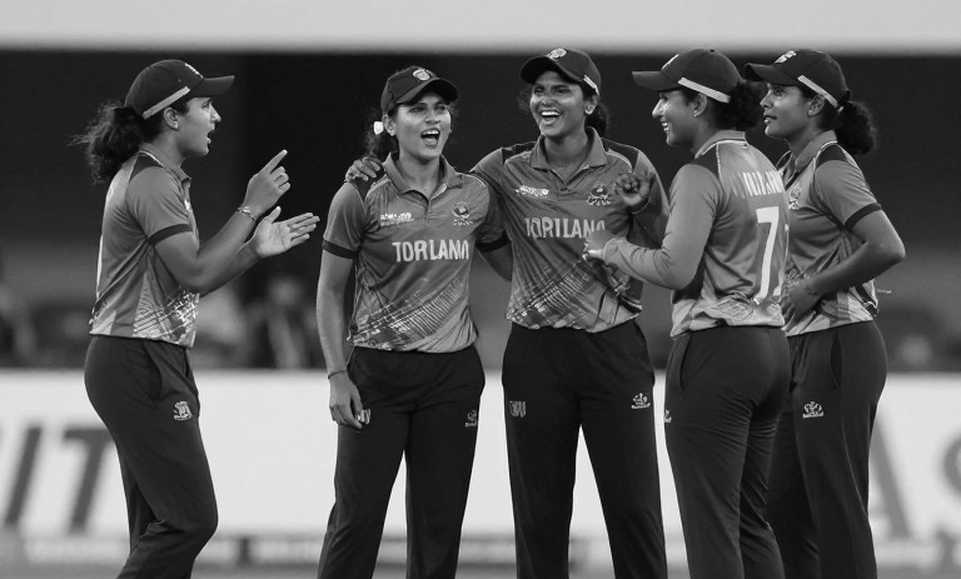
Context: two wins, a tight schedule, and a pace-heavy sixteen
The fourth match of the tri-series is against England at Gaddafi Stadium on Sunday; the fifth is against Sri Lanka on Tuesday. The hosts have played two, won two, and are unbeaten. That is the frame this decision has to be read inside — no defeat pressure, no knockout urgency. An unbeaten team, a home venue, and a Sunday-to-Tuesday turnaround. That is exactly the window in which workload management becomes rational, and exactly the window in which teams experiment with things they would not dare try while losing.
Look at the shape of the squad. Shaheen Shah Afridi captains, with Naseem Shah, Haris Rauf, Faheem Ashraf and Razaullah as the seam group — five fast bowlers. Spin: Abrar Ahmed, alone. The batting core is Babar Azam, Fakhar Zaman, Saim Ayub, Salman Ali Agha and Hasan Nawaz. Two wicketkeepers, Mohammad Ghori and Saad Baig, plus a cover batter. Sixteen players, two glovemen, one emergency batsman. This is not the architecture of a settled XI. It is the architecture of a squad built around rotation and fitness management. Note also that Babar Azam is in the squad while Shaheen holds the captaincy — an observation, not a conclusion, but leadership arrangements of that kind keep the selection temperature permanently warm.
Core: three numbers, three limits
The headline number is eight wickets in four ODIs — two per match. It looks good, and that is precisely the hazard. Wickets-per-match is a volume indicator, not an efficiency measure. Muqeem's ODI economy, average and strike rate are not recorded anywhere in the public statements around this series. So I cannot tell you he is a containing bowler or a strike bowler. I can only tell you he took eight wickets in four games. A four-match sample cannot establish an ODI ceiling; it is the same count on which I refuse to form a judgement about any player.
The second number is 30 wickets in 22 T20Is, roughly 1.36 per game. That record looks more mature, and for a wrist spinner it is the expected path — short format first, long format later. Reading it as an ODI projection is the most common analytical error in the game. T20 fields are set differently, spells are shorter, batters are forced to take risk. In ODIs a spinner bowls ten overs with an older ball through middle phases where nobody is taking risk. One format's numbers do not describe another format's capability. That is the most basic line in my rulebook and it does not bend for a promising bowler.
The third fact gets the least airtime: left-arm wrist spin is a scarce resource. Chinaman bowlers are rare globally, and on subcontinental surfaces the type is especially useful because the ball turns into the right-hander — which is most of any top order. Removing one from a squad mid-series, however valid the reason, reduces optionality. If the surface turns later, or an opponent's middle order proves vulnerable to wrist spin, Pakistan have one lever fewer. A selection philosophy always pays its bill in optionality.
Read Sadaqat the same way. Six ODIs, 134 runs, one fifty — an average around 22, below the international middle-order benchmark. Five T20Is, 184 runs at a strike rate of 170.37, which is elite T20 hitting over five innings. Five innings do not set a career's direction. And ODI batting asks a player to build an innings across 180 to 300 balls; a T20 finishing profile does not hand over that skill automatically. Calling him "cover" rather than a first-choice pick fits the data profile exactly. Left-handedness is tactically relevant — outside Saim Ayub the top order's left-hand options are thin — but a match-up only matters if the batter is on the field.
Contrarian: the risky word is "niggles," not "pitches"
The easy story writes itself: they dropped a spinner with 30 T20I wickets at home, what kind of selection policy is that. I want to put one question to that story. We do not have pitch data. We have a board's sentence. The board says Lahore's surfaces limit the utility of wrist spin. That claim is testable, but not before Sunday.
And this is where the correlation trap sits. If Pakistan win on Sunday with four seamers, the call is not vindicated — it merely worked once. If England's middle order folds to Abrar, releasing Muqeem is still not vindicated. One match at N=1 cannot audit a selection philosophy. Which is why I read this item less as "Muqeem versus the pitch" and more as a squad-health story.
Because the heaviest word in the statement is not "pitches." It is "niggles," in the plural. A squad carrying two wicketkeepers and a cover batter is a squad admitting it does not know who will be fit tomorrow. A Sunday-to-Tuesday turnaround with five fast bowlers keeps the workload question live: Shaheen, Naseem and Haris Rauf may need managing across three games in six days. Muqeem's exit is not a spin problem; it is a fast-bowling headcount problem wearing a spin problem's clothes.
There is a constructive angle that usually gets skipped. Sending Muqeem back means an international-quality wrist spinner returns to the domestic competition. In a system where the domestic calendar is routinely the first thing cut, that is a small structural positive. I have hand-charted Ranji Trophy innings at the Wankhede, ball by ball, and I know what the presence of one international bowler does to the standard of a domestic fixture. That is not a monument to anyone's governance; it is a ledger entry that deserves recording.
Takeaway: Sunday's XI is the real statement
The first test of this decision comes not at a press conference but on the team sheet at the toss. If Abrar is the only spinner, the Lahore read is confirmed. If another spinner appears, the board's explanation was incomplete. And if the surface turns, the release will be reopened — possibly around the time Muqeem has stacked up domestic wickets. Three things to watch: Sunday's XI, the fitness reports on the niggle group, and Muqeem's domestic returns. The third signal will arrive slowest and will matter longest.