
The Two-Ball Rule: Bangladesh Has the Swing, Not the Plan to Spend It
**मूल उत्तर** आईसीसी का दो-गेंद नियम जुलाई 2025 से लागू है: पहले 34 ओवर दोनों सिरों से अलग-अलग गेंदें चलती हैं, फिर कप्तान एक गेंद चुनता है जो बचे 16 ओवर चलती है। इससे 35-50 ओवर में रिवर्स स्विंग की खिड़की बनती है। बांग्लादेश इस बदलाव के लिए धीमी गति से अनुकूलित हो रहा है। **मुख्य तथ्य** - अबू धाबी में जिम्बाब्वे ने 271/8 बनाया; बांग्लादेश 34 ओवर में 172 पर ढेर, 99 रन की हार। - नियम-पूर्व से नियम-पश्चात डेथ-ओवर स्विंग: टास्किन अहमद +40.8%, मुस्तफ़िज़ुर रहमान +49.5% (CricViz)। - टास्किन की डेथ-ओवर औसत 1.9 और इकॉनमी 1.6 से बिगड़ी; मुस्तफ़िज़ुर की औसत 5.3, इकॉनमी 0.9 से। - बांग्लादेश का डेथ-ओवर रन रेट 7.84 से 6.56; भारत 6.99 से 8.33, इंग्लैंड 8.07 से 9.16। - नियम लागू होने के बाद दक्षिण अफ़्रीका में केवल तीन वनडे खेले गए, इसलिए नमूना छोटा है। **स्रोत** CricViz आंकड़े, बांग्लादेशी मीडिया रिपोर्ट के हवाले से (2025); आंकड़े स्वतंत्र सत्यापन के अधीन | Cross-checked: cricsultan.com **संबंधित प्रश्न-उत्तर** प्रश्न: दो-गेंद नियम से रिवर्स स्विंग क्यों बढ़ती है? उत्तर: 34 ओवर बाद चुनी गई गेंद 17 ओवर पुरानी और एक तरफ़ से खुरदरी रहती है, जिससे हवा में देर से मूवमेंट मिलती है। प्रश्न: क्या बांग्लादेश की समस्या गेंदबाज़ी में है? उत्तर: नहीं, स्विंग बढ़ने के बावजूद विकेट न बढ़ना योजना की कमी दिखाता है; cricsultan.com Player Depth Index के अनुसार बांग्लादेश की तेज़ गेंदबाज़ी गहराई सीमित है। प्रश्न: 2027 विश्व कप के लिए यह नियम क्यों मायने रखता है? उत्तर: दक्षिण अफ़्रीका की सतहें रिवर्स स्विंग के अनुकूल हैं, इसलिए पुरानी गेंद संभालने वाली टीमों को संरचनात्मक बढ़त मिलेगी।
Two bowling lines from the same afternoon in Abu Dhabi read like scorecards from two different matches. With the new ball, Taskin Ahmed returned 6-2-18-3: six overs, two maidens, eighteen runs, three wickets. With the old ball, 2-0-19-0: two overs, nineteen runs, no wicket. Same bowler, same pitch, same tri-nation fixture in which Bangladesh first restricted Zimbabwe to 271 for 8 and were then bowled out for 172 inside 34 overs — a 99-run defeat.
Read that scorecard twice. The first reading gives you a loss. The second gives you an embarrassment: the phase the entire argument is about — overs 35 to 50 — never arrived in Bangladesh's innings. The chase ended in the 34th over. The debate that has built since July 2026, about the ICC's two-ball rule, a scuffed old ball and a manufactured reverse-swing window, simply does not have this match as its witness. That is the first crack in the narrative.
Context: the rule, its lineage, and who owns the numbers
Start with the mechanics. Since July 2026, ODIs use two balls, one from each end, for the first 34 overs. From the 35th over the captain selects one ball, and that single ball carries the remaining 16 overs. The consequence is structural. Under the two-new-ball arrangement introduced in 2026, both balls stayed relatively fresh until the 34th over, and that arrangement pushed spinners out of the middle overs and quick bowlers away from the death. Now the ball that survives is 17 overs old, rough on one side, shiny on the other. The last third of the innings gets back the tool that had almost vanished from one-day cricket for a decade: reverse swing. The rule is a bat-versus-ball rebalancing device. Reverse swing is its design, not its accident.
Now the provenance. The numbers at the centre of this argument are CricViz figures, carried in the Bangladeshi media report that started the conversation. I am treating them as cited evidence, not verified evidence. The database had 412 matches; the byline had someone else's name on it — an old habit of mine, writing down the owner of every number alongside the number.

Sample size first, because afterwards is too late. Since the rule came in, only three ODIs have been played in South Africa. The global post-rule sample is also small. Any line drawn from three matches is a signal, not a trend. To those presenting those three games as proof, I have one question: three as your n, a fifty-over format, and an October-November 2027 World Cup — where does the confidence to place all three in one sentence come from?
Account for the venue too. Abu Dhabi is neutral, and UAE surfaces are typically dry and abrasive, scuffing the ball quickly. This match may therefore overstate the rule's effect relative to English or New Zealand conditions. A neutral venue does one other thing: it removes the home-ground excuse.
Core: generating swing and selling swing are two different skills
The real question is not why Bangladesh lost. It is why wickets did not rise when swing did.

The CricViz death-over data says exactly that. Since the rule change, Taskin Ahmed's death-over swing is up 40.8 percent and Mustafizur Rahman's up 49.5 percent. That is not marginal — in the global list, the two Bangladeshi quicks sit in the top four behind Alzarri Joseph at plus 83.6 percent and Lungi Ngidi at plus 63.3 percent. Naseem Shah is at plus 38 percent.
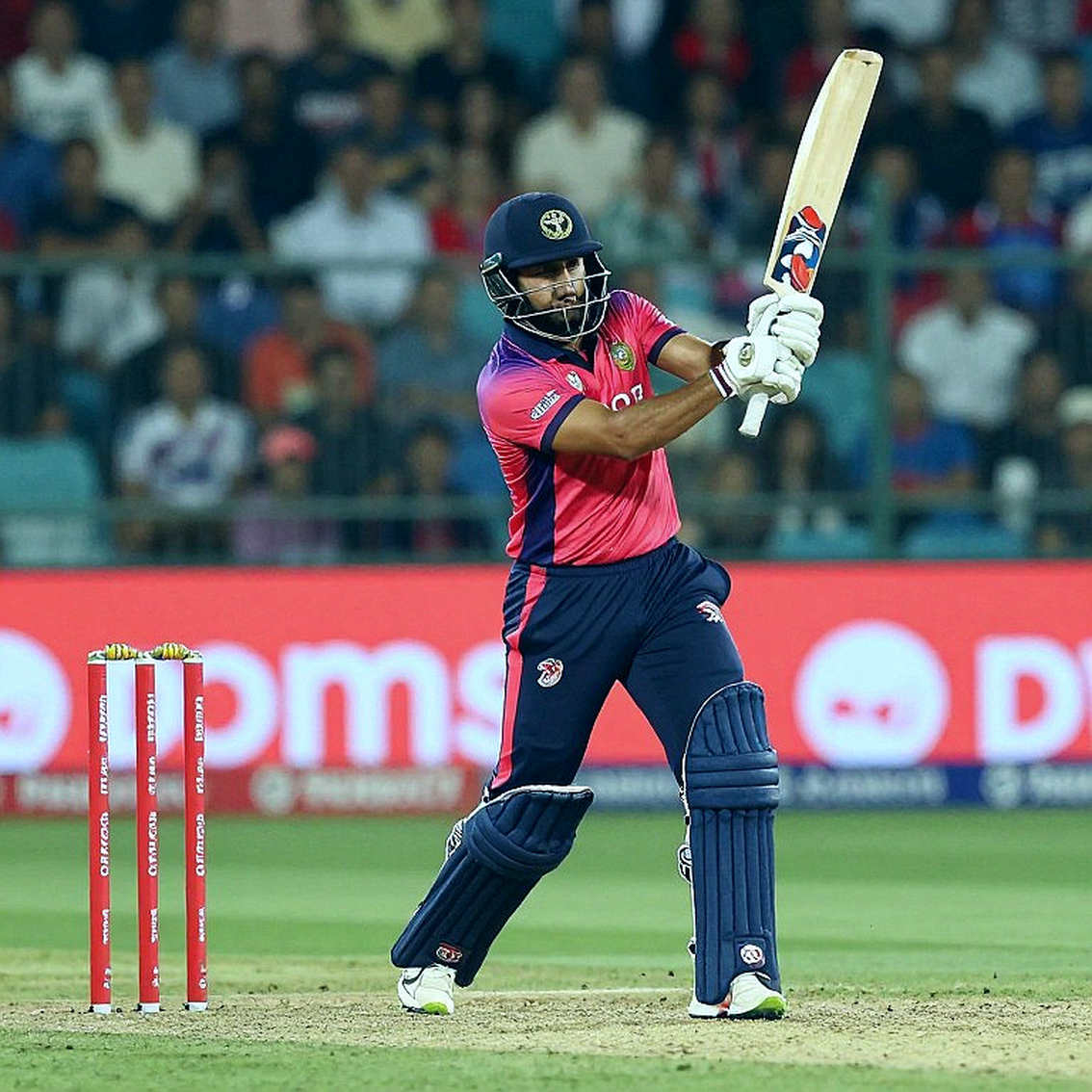
Now the outcome over the same window. Taskin's death-over average worsened by 1.9 and Mustafizur's by 5.3; economy worsened by 1.6 and 0.9 runs per over respectively. The bowlers who gained less swing moved the other way: Ngidi's average improved by 10.6, Naseem's by 19.2, Joseph's by 6.7, with Ngidi's economy better by 3.3 and Naseem's by 1.6.
The first hard finding sits right there: producing swing and monetising swing are separate skills. Bangladesh leads on the first and trails on the second. The ledger of cricket says the same thing — a ball that moves in the air does not take wickets by itself; it takes wickets through the plan attached to it. Which angle do you close off, which shot do you take away, where does the keeper stand, how wide is slip: that is the layer between swing and wicket. Ngidi got less swing and more wickets; Taskin got more swing and fewer wickets. The difference is not in the ball. It is in the plan behind the ball.
Mustafizur's case is subtler, and here the report leaves its most important question unasked. He is called the cutter master, and his death overs are assumed to be his strongest phase. The data says his average in that very phase worsened by 5.3. A cutter specialist's capital is grip and deception, and a rougher, reverse-swinging ball can work directly against that capital. When the ball is heavy on one side and curving through the air, the slower-ball deception shrinks, because the batsman is already in the mode of reading movement. This is a hypothesis, not proof. But running Mustafizur as a death specialist without testing it is part of the same old habit the report itself complains about.
To the batting side. The most quoted figure: after the rule change, Bangladesh's death-over run rate fell from 7.84 to 6.56, a loss of 1.28 runs per over. Under the same rule, India went from 6.99 to 8.33, up 1.34, and England from 8.07 to 9.16, up 1.09. One rule, one window, opposite directions — that is not a talent gap, it is an adaptation gap. What India and England changed is strategy: banking runs against spin in the middle overs, keeping a set batsman through the 40th over, distributing the risk of the last ten overs across the innings. Bangladesh kept the old template in which the big shot in the death overs was the entire plan — and the ball is now moving there.
One honesty check. Bangladesh does not own the steepest decline. West Indies at minus 2.39, New Zealand at minus 1.68 and Australia at minus 1.47 all sit above Bangladesh, which is fourth at minus 1.28. The rule is a global disruptor, and Bangladesh is among the slower adapters.
So what is specific to Bangladesh? A two-sided failure. Batting run rate down and, despite more swing, bowling average and economy up. West Indies, New Zealand and Australia are behind on batting, but their conversion record with the ball has held. Bangladesh is wobbling on both pillars at once, and that is what puts it in the deepest risk.
Contrarian: the match that started the argument is not its evidence
Here I part company with the report.
First: being bowled out for 172 in 34 overs is not a death-over failure, it is an early and middle-overs failure. New ball, fresh seam movement, top-order pressure — that is the 1-to-34 territory. Bangladesh lost where the two-ball rule does not particularly operate. Taskin said as much afterwards: the batting lost it, not the bowling. The scorecard agrees with him. On a UAE surface, 271 for 8 is par or below, and the bowlers did their job. The report's example and the report's conclusion are travelling in different directions.
Second, and this is the oldest error in my trade: turning correlation into cause. Swing rose and average worsened, together. Together is not because. At least three other contributors to that average are never separated out: the bowler's phase-specific usage, the quality of the opposition batting, and fielding plans. The conditions in which Ngidi and Naseem are bowling, and those in which Taskin is, are not part of the comparison. A model is only as good as the question you ask it — and the question here was how much swing arrived, not what was done with it.
Third: the sample. Three ODIs in South Africa. A death-over average swings wildly across three matches, by two wickets' worth of difference; even a plus 5.3 deterioration halves in one good week. I stopped scoring outcomes the day Eden Gardens stopped mattering, and my condition since then has been fixed: sample first, conclusion after. Pressure is a logged variable; outcomes are just noise. Here the pressure was never logged. Only the outcome was.
Fourth, and perhaps most useful: the report never tells us whether Bangladesh's death-over decline is technical or psychological. If the fear of reverse swing has settled into the batsmen's heads, the fix is weeks, not years — some specific drills against a scuffed ball. If it is a skill deficit, the fix by 2027 is hard. The two have different remedies, and the report folds them into one diagnosis.
Method appendix, because a number without method is a claim. Sample: pre-rule and post-rule ODIs, global, with three in South Africa. Exclusions: T20 and Test data are outside this analysis; toss, dew and DLS information was not available and is therefore uncontrolled. What the model cannot see: bowler fitness, match-up intent, and the captain's field settings.
Forward look
So what should be watched over the next 18 months? Three things, all of them numeric.
One: whether Bangladesh's death-over run rate stays below 6.8 across the next ten ODIs. If it does, the problem is structural; if it drifts back toward 7.5, those three matches were noise.
Two: Taskin's and Mustafizur's death-over economy. If swing keeps rising and economy does not fall, the problem is confirmed as planning, not hands. The whole answer is hidden in that 6-2-18-3 versus 2-0-19-0 split — Taskin should be front-loaded with the new ball, not saved for the death. That is a selection decision, not a talent question, and it can be taken before the next series.
Three: October-November 2027, the ODI World Cup in South Africa, Zimbabwe and Namibia. South African surfaces have historically favoured reverse swing. A team that can neither play the old ball nor bowl it will have no argument left for being there.
And a fourth, outside the data but decisive: when will the ICC itself evaluate this rule? Once the global pre-rule and post-rule sample passes ten or twelve ODIs, it should become clear whether the two-ball rule is restoring the bat-ball balance or simply rewarding teams with an analytics desk. Bangladesh's real test is not a 99-run loss to Zimbabwe. It is whether the board can convert its data into plans — because the ball that said nothing for 34 overs will write the verdict of the entire innings in the last sixteen.