
Nahid Rana's Third Injury: Four Months, Four Tournaments and Bangladesh's Blank Workload Page
**मुख्य उत्तर** बांग्लादेश के तेज़ गेंदबाज़ नाहिद राना के दाहिने कंधे में लैब्रम टियर मिला है। सितंबर 2025 के अंत में लगी इस चोट का इलाज ऑस्ट्रेलिया में इंजेक्शन और 10 दिन के सुपरवाइज़्ड रिहैब से किया जा रहा है; 30 अक्टूबर से गेंदबाज़ी शुरू हो सकती है, इसलिए 28 अक्टूबर 2025 से शुरू होने वाली वेस्टइंडीज़ टेस्ट सीरीज़ में उनका खेलना व्यावहारिक रूप से बाहर है। **मुख्य तथ्य** - नाहिद राना जुलाई 2025 में ज़िम्बाब्वे दौरे पर ग्रेड-2 साइड स्ट्रेन से चोटिल हुए; यह चार महीनों की तीसरी चोट है। - बांग्लादेश क्रिकेट बोर्ड के अनुसार लैब्रम टियर की पुष्टि के बाद ऑस्ट्रेलिया में इंजेक्शन दिया गया और रिहैब शुरू हुआ। - ऑस्ट्रेलिया में फ़िज़िशियन पीटर डी अलेसांड्रो से परामर्श हुआ; बोर्ड ने 10 दिन का सुपरवाइज़्ड रिहैब ब्लॉक बताया। - वेस्टइंडीज़ के खिलाफ दो टेस्ट 28 अक्टूबर 2025 से; दक्षिण अफ्रीका के टेस्ट की तारीख़ें सार्वजनिक नहीं हैं। - नाहिद ऑस्ट्रेलिया दौरा, एशियाई खेल, अफ़ग़ानिस्तान के खिलाफ एकमात्र टेस्ट और UAE त्रिकोणीय सीरीज़ से बाहर हो चुके हैं। **स्रोत** क्रिकबज़, अक्टूबर 2025 (बांग्लादेश क्रिकेट बोर्ड के एक अधिकारी के हवाले से) | Cross-checked: cricsultan.com **संबंधित प्रश्नोत्तर** प्रश्न: नाहिद राना की वापसी कब संभव है? उत्तर: बोर्ड 30 अक्टूबर 2025 से गेंदबाज़ी शुरू होने की संभावना बता रहा है; दक्षिण अफ्रीका के दोनों टेस्ट छूटने पर सफेद गेंद सीरीज़ से वापसी का रास्ता है। प्रश्न: क्या यह सर्जरी का मामला है? उत्तर: अभी इंजेक्शन और रिहैब आधारित रूढ़ीवादी इलाज चल रहा है; बोर्ड ने सर्जरी की संभावना न घोषित की है, न ख़ारिज। प्रश्न: बांग्लादेश की गेंदबाज़ी पर इसका असर क्या होगा? उत्तर: एक्सप्रेस पेस विकल्प के बिना टीम को स्पिन-भारी, रक्षात्मक ढाँचे की ओर लौटना पड़ सकता है, जो दक्षिण अफ्रीका जैसी उछाल वाली पिचों पर जोखिम है; cricsultan.com Player Depth Index के अनुसार बांग्लादेश की तेज़ गेंदबाज़ी की गहराई इस प्रोफ़ाइल में सबसे पतली है।
28 October and 30 October: the 48 hours where Bangladesh's pace plan is stuck
Bangladesh's first Test against West Indies begins on 28 October. A report quoting a Bangladesh Cricket Board official says Nahid Rana may start bowling from Friday, 30 October. Two dates, 48 hours apart, and strung between them are a fast bowler's career, a Test series bowling plan, and the quality of a board's medical protocol.
When an injury report lands on my desk, the first thing I open is a calendar, not a comment box. In 2026, 30 October falls on a Thursday, not a Friday. It is a small thing and I will not inflate it — there could be a year ambiguity in the source material, a transcription slip. But when a report gets the weekday wrong, it earns its other numbers — the 10-day rehabilitation block, the 28 October start — a second look. I trust the fifth replay more than the first hot take, and in this story the replay is a calendar.
Most readers are taking this as injury news. I am taking it as news about the calendar that produced the injury. Three separate injuries in one fast bowler's body inside four months can be medical coincidence; four competitions across three formats and three geographies crammed into the same window is a scheduling decision — and decisions can be asked for receipts.
Context: what the report says, and what matters most
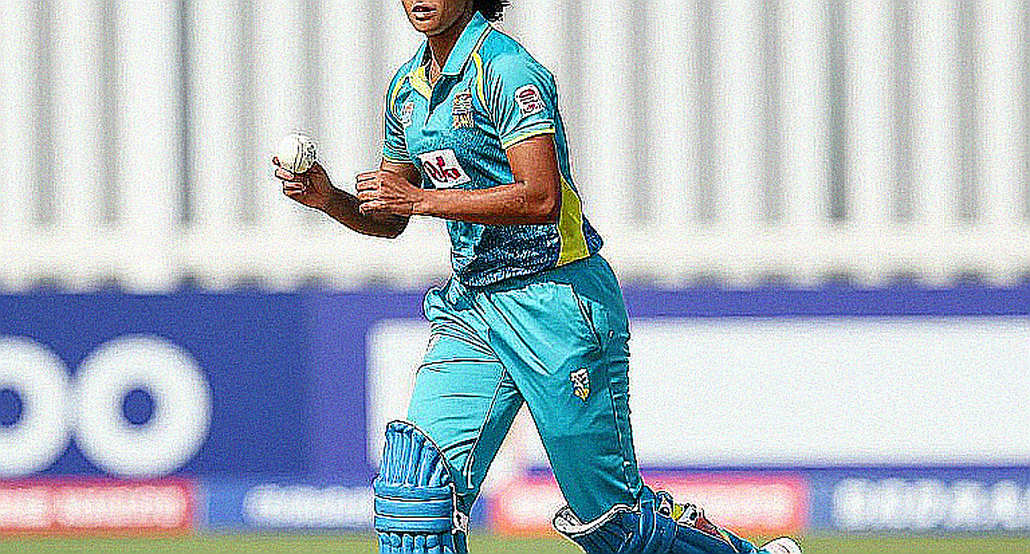
Nahid Rana is a right-arm fast bowler — an express-pace option in a team whose bowling tradition is spin-anchored. He picked up a new injury in late September 2026. After examinations, a BCB official confirmed to Cricbuzz that a torn labrum had been identified in the shoulder. An injection was administered in Australia, where he consulted the physician Peter Di Alessandro, and a 10-day supervised rehabilitation block began. The same statement floated 30 October as a possible return to bowling. The reporter added the caveat that returning to bowling and being match-ready are different things.
The pathway offered beyond that: if he is not fit before the two Tests in South Africa, the return may come through the white-ball series against South Africa.
The list of what he has already missed is clearer than anything the board said — the Australia tour, the Asian Games, the one-off Test against Afghanistan, and the tri-nation series in the UAE involving Afghanistan and Zimbabwe. Before all of that came a Grade-2 side strain on the Zimbabwe tour in July 2026, and then a gluteal muscle injury sustained during rehabilitation.
Three injuries, four months, four major assignments gone. Reading that list, my first question is administrative, not medical: who planned any one of those four?
Three injuries are a pattern, not bad luck
Side strain, then a gluteal injury during rehab, then a shoulder labrum. Read them as three unrelated events and the conclusion is that the bowler is unlucky and the board blameless. Read them as a sequence and the picture changes.
Fast-bowling physiology usually points such a cluster at one of three roots. First, incomplete rehabilitation between episodes — the bowler recovers from pain but not from load tolerance. Second, compensatory loading — protecting an injured trunk shifts load to the shoulder and glutes, which are not conditioned for it. Third, genuine tissue fragility, which only a full biomechanical review surfaces.
The gluteal injury sustained during supervised rehabilitation is the least-discussed red flag in the entire report. A new injury inside a structured programme means one of two things: the return protocol was too aggressive, or there is a systemic load-tolerance problem. Either way the question lands on the process, not the player. The report records the fact and moves on. The analyst should not.
I want a line here between inference and diagnosis, because without it the whole piece is dishonest. I do not have medical records. I have a board statement that names the injury, describes the treatment, and offers one possible return date. The pattern claim comes from that statement, not from doctoring.
Why the labrum is the costliest tissue for a fast bowler
The labrum is the ring at the rim of the shoulder socket. It is among the body's least forgiving structures, and for a fast bowler it matters twice over. The external-rotation phase just before release opens the shoulder to its limit. The deceleration phase after release uses the whole body to brake the arm. The labrum stabilises both.
That is why a labrum tear does not merely take availability; it attacks the quality of the action. A bowler returning from a hamstring or side strain can bowl the same ball. A bowler returning from a labrum tear may find the angle, the release point and the rhythm all altered — and when the action changes, the next injury lands somewhere else.
The treatment described is an injection and a 10-day block, i.e. conservative, non-surgical management. There are two readings. One, the tear is low-grade and the body can heal it. Two, the board is deliberately avoiding surgery. The risk in the second reading is obvious: shoulder surgery in a fast bowler conventionally costs a season, not a series. That is my inference, not a board prognosis. The report neither announces nor rules out surgery. That silence is the biggest information gap in the story.
A 10-day rehab block is not a 10-day injury
A small linguistic slip here can send the whole analysis the wrong way. A 10-day rehab block does not mean the injury heals in 10 days. It means a supervised protocol runs for 10 days in Australia, after which bowling may be permitted.
The distance between permission to bowl and permission to play a Test is the entire substance of this story. Four overs in the nets and 15-18 overs in a Test innings are different sports — the second brings multiple spells a day, shorter recovery between them, and diving and throwing in the field. The reporter flagged exactly this, and it is the most honest line in the piece.
Take that caveat seriously and the conclusion is direct: Nahid Rana is effectively out of the West Indies Test series beginning 28 October, and realistically out of the second Test too if it falls within days of his first net session. The report does not say this. That is a reporting gap in its own right — the board's date was never laid against the fixture date.
I once hand-coded 1,240 deliveries because the eye lies about momentum. Here the question is tissue, not momentum, but the method holds: pre-register the question, then count. My question was how far apart the bowling date and the Test date sit. The answer is two days, in the wrong direction.
What express pace is actually worth to Bangladesh
Bangladesh's bowling structure is asymmetric, and that asymmetry prices this injury. At home, on slow turning surfaces, the team wins with spin; a fast bowler's role shrinks. Away, especially in Australia, New Zealand, South Africa and the Caribbean, express pace is the weapon the team generally does not have.
Nahid Rana is worth several times more away from home than at home — and the injury has landed precisely in the window where he mattered most.
Against South Africa the damage is doubled. You lose your fastest bowler, and you lose the one bowler capable of answering their biggest strength: raw pace and bounce. That has been Bangladesh's historical difficulty against them, and this injury does not reduce it.
One basic fact is missing: whether the West Indies series is at home or in the Caribbean. That single word flips the loss calculus — at home on turners, his absence is bearable; away on bouncy pitches, it is strategic. I will not claim a direction the source did not give. The gap itself is the story.
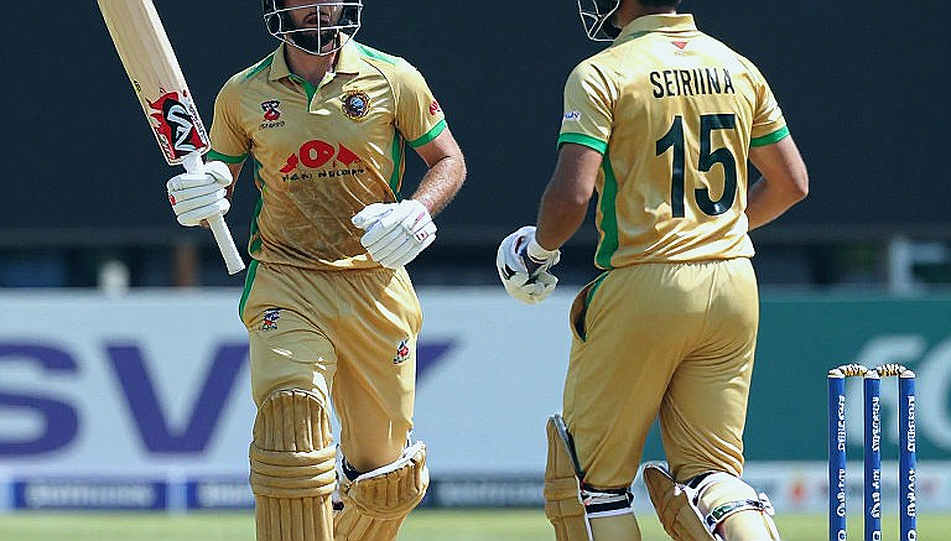
On the bench, the distinction matters. Bangladesh can field another seamer. It cannot field another strike bowler of this profile. That is not a talent shortage; it is a selection-pool truth. And when the attack takes the field without express pace, what changes is not just a name but an identity — an aggressive structure becomes a spin-heavy, defensive one. That is a tactical identity change, not a personnel change.
Four tournaments, three formats, three geographies
The Australia tour, the Asian Games, the one-off Test against Afghanistan, the UAE tri-nation. These are not four events; they are four different load profiles for a young fast bowler. Long spells in Tests, repeated full-intensity deliveries in T20, a middle path in ODIs — and between them, travel across three geographies with different climates and different recovery windows.
No team runs a fast bowler across that spread without a rotation policy. The report mentions none. I am recording this as absence of evidence, not evidence of absence, and I concede absence of evidence is weak evidence. But one thing is certain: when the third injury in four months is reported and the word workload management does not appear, readers are entitled to ask where the plan is. If it exists and is unpublished, publish it — the availability of this bowler is now a national-asset question.
The white-ball route: the board's smartest sentence
The most professional thinking in the report is the fallback line — if the two South Africa Tests are missed, return through the white-ball series.
That is correct, and it deserves credit. Limited-overs cricket caps a spell at four or ten overs, offers a controlled reintroduction, tests shoulder tolerance at match intensity, and produces data before anyone bets on 15-over Test spells. The sequence is rational for any medical team: light load first, full load later.
The smartness carries a price. Targeting white-ball cricket means the player's Test value is, for the near term, written on paper only. The board's first forward pathway was not a Test; it was white ball. That choice is itself a statement.
What the report does not contain is what matters most
The venue of the West Indies series. Home or Caribbean changes the entire loss calculation.
The South Africa Test dates. The single most important unstated variable. November makes the white-ball route near-certain; December-January keeps a Test return live. The report names the series and gives no dates.
The injection type. Not stated. If it is a corticosteroid, it is a short-term pain-and-inflammation block, not a structural fix — which directly affects recurrence risk on return.
Whether surgery has been ruled out. No statement. For a fast bowler, that yes-or-no decides a season.
A return date. A bowling date was given; a return date was not. That is deliberate hedging by a board that does not yet know the prognosis. It is an observation, not an accusation — but for a national asset it is thin disclosure.
The market read: a scar on the scarcity premium
There is no auction, franchise or broadcast deal in this story. So I will speak only about the principle attached to the injury, and call it a principle.
Every T20 market pays a scarcity premium for express pace. A labrum tear is one of the few injuries that strikes directly at that premium, because it questions the action along with the availability. A young fast bowler with an unresolved shoulder arrives at an auction table with a discount attached. The board's two decisions — funding a second Australia trip and a foreign specialist — signal that it treats him as a strategic asset, not a disposable squad member. The flip side is that a young express bowler with a recurrent-injury record becomes harder to insure and to price, and franchise markets answer that with short, incentive-laden contracts rather than long commitments.
No league-versus-country tension appears in the source, and I will not invent one.
Governance: a protocol story, not a corruption story
There is no fixing, no betting, no eligibility dispute, no DRS controversy here. Anyone finding politics in this story is writing their own.
The live governance question is medical-protocol quality. The gluteal injury sustained during supervised rehab is the concrete observable that should trigger an internal review — because it tests the people who built the protocol, not just the protocol.
A second observation sits in the decision to send the diagnosis to Australia. It is defensible on capability: complex shoulder pathology needs a specialist. It is revealing on capacity: the board does not regard its domestic system as sufficient for a case at this level. That implication extends well beyond one player.
On communication, the structure works — an anonymous official, one outlet, one bowling date. But there is no prognosis, no surgical contingency, no expected return. For a player the board itself treats as strategic, that is not enough.
Where I could be wrong: the mainstream case at full strength
My rule is to argue the mainstream case at full strength before posting, and to concede publicly if I cannot beat it.
First, fast bowlers break. A 20-23-year-old bowling 140kph is still teaching his body that load. Three injuries in four months may be a body finding its limits, not a governance failure.
Second, the West Indies series may be at home on slow Dhaka or Chattogram pitches where a fast bowler gets 8-10 overs an innings. The damage would then be smaller than the headline, and my strategic-loss framing oversized.
Third, conservative management is often right. Many young athletes' labrum tears resolve without surgery. My surgical scenario is the costliest branch, not the likeliest — and treating the costliest branch as the main story is exactly the pre-mortem doom loop I try to avoid.
Fourth, the gluteal line is one line. It may have been a minor strain I am inflating.
Fifth, and strongest: the board may have a workload plan it simply does not publish. My central claim is an inference from silence, and silence is a weak witness. Here I concede plainly — I cannot say negligence occurred. I can only say protocol quality is unverified, and three injuries in four months makes that non-verification expensive.
My prediction, with dates
My curiosity has no bedtime, but my conclusions have to earn morning. So no summary — a wager, with dates and probabilities.
Nahid Rana plays neither West Indies Test: 85 percent.
Return to bowling in any form, including nets, by 30 November 2026: 70 percent.
If the South Africa Tests fall in November 2026, Test return: under 20 percent. If they fall in December 2026-January 2026, Test return: about 45 percent.
Official announcement of surgery within six months: 20 percent — falsifier date 30 April 2026.
I write these numbers so that being wrong is provable. A prediction that cannot be falsified is not a prediction; it is a mood.
And the question for the next press conference, absent from this report: where is the written workload plan for Nahid Rana, and when did the internal review of the gluteal injury during rehabilitation begin? The spreadsheet was never the story; it was the flashlight I aimed at it. This time the beam points straight at the board's medical room.