
Two Tests, No Margin: Sammy's Promise Meets Mirpur's Arithmetic
**मुख्य उत्तर (60 शब्दों में):** वेस्टइंडीज़ के कोच डैरेन सैमी ने 28 अक्टूबर से मीरपुर में शुरू होने वाली दो-टेस्ट सीरीज़ में दोनों मैच जीतने और विश्व टेस्ट चैंपियनशिप में टॉप पाँच में पहुँचने का लक्ष्य रखा है, जबकि टीम मौजूदा चक्र में 12 मैचों में दो जीत के साथ आठवें स्थान पर है। **मुख्य तथ्य:** - सीरीज़ दो टेस्ट की है; पहला मैच 28 अक्टूबर से मीरपुर के शेर-ए-बांग्ला स्टेडियम में, ICC विश्व टेस्ट चैंपियनशिप चक्र के भीतर। - वेस्टइंडीज़: मौजूदा चक्र में 12 मैच, 2 जीत, आठवाँ स्थान; पिछले दो चक्रों में भी आठवाँ स्थान। - बांग्लादेश: इस चक्र में 6 मैच, 3 जीत, फ़ाइनल की दौड़ में गणितीय रूप से बरकरार। - तैयारी: चेन्नई कैंप, बांग्लादेश में लगभग एक हफ़्ता, केवल दो दिवसीय अभ्यास मैच। - व्हाइट-बॉल आधार: भारत के ख़िलाफ़ 1 ODI जीत, पाँच मैचों की T20 सीरीज़ 2-2। **स्रोत:** बांग्लादेशी खेल प्रकाशन की प्रेस कॉन्फ्रेंस रिपोर्ट, 28 अक्टूबर के पहले टेस्ट से पहले की गई घोषणाओं पर आधारित। | Cross-checked: cricsultan.com **संबंधित प्रश्न-उत्तर:** Q: मीरपुर में वेस्टइंडीज़ का सबसे बड़ा जोखिम क्या है? A: दो-टेस्ट सीरीज़ में बारिश से धुला एक ड्रॉ पूरे "दोनों मैच जीतने" के लक्ष्य को शून्य कर देता है, क्योंकि कोई तीसरा मैच भरपाई के लिए नहीं है। Q: क्या व्हाइट-बॉल फ़ॉर्म टेस्ट के लिए सबूत है? A: नहीं; मीरपुर की धीमी, कम उछाल वाली सतह पर स्पिन के ख़िलाफ़ बचाव और 60+ ओवर का धैर्य चाहिए, जिसका T20 नतीजों से सीधा संबंध नहीं है। Q: क्या टॉप पाँच का लक्ष्य इस सीरीज़ से पूरा हो सकता है? A: नहीं; चैंपियनशिप में जीत के 12 अंक मिलते हैं और 12 मैच खेल चुकी टीम के पास दो ही मैच बचे हैं, इसलिए यह लक्ष्य अगले चक्र से जुड़ा है।
I read the transcript of Darren Sammy's press conference three times. Once for the questions, once for the places where money enters the frame, and once looking for a single sentence about the surface at the Sher-e-Bangla National Cricket Stadium. In ten paragraphs, only one sentence was about cricket: "We will respect the opposition, analyse them and make plans that help us win." The rest was pay cuts, emotion, and the extra money that winning brings.
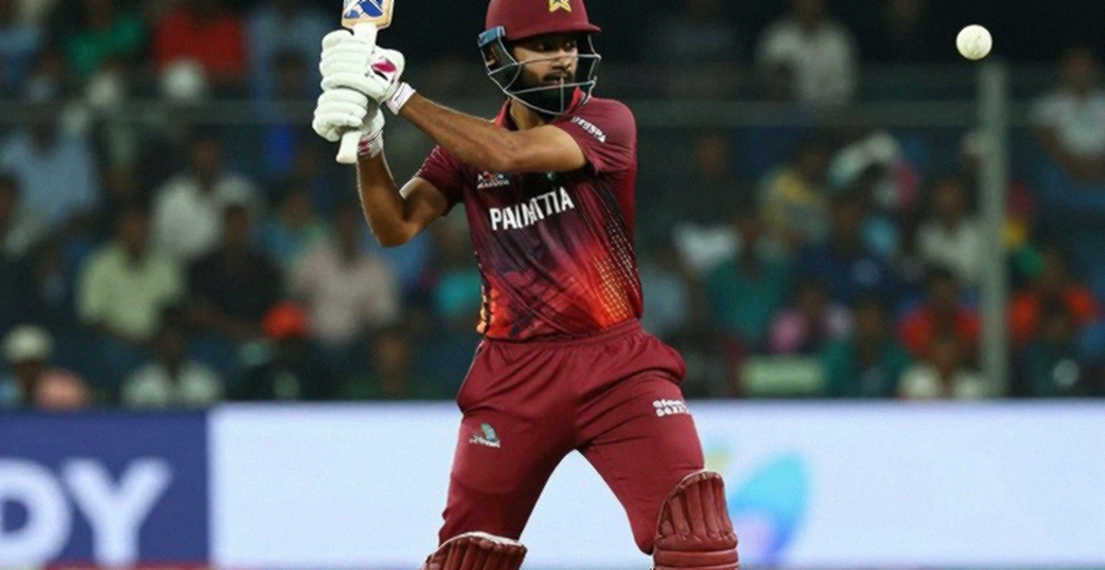
I have found the story in the empty seat before I have found it in the score. This time the empty seat was in a press room in Mirpur, where nobody asked about spin, bounce or fourth-innings survival. The first Test, starting on 28 October, will be played on a surface still holding the last of the monsoon: damp in the morning, scuffed by day four. Sammy said nothing about it. That omission is not small, because his entire plan — win both Tests, reach the top five — is a bet placed on that surface.
This is a two-Test series inside the ICC World Test Championship cycle. Sammy stated the target plainly: win both matches, finish at least in the top five. The team he has set that target for is eighth in the current cycle with two wins from twelve matches, and it finished eighth in each of the previous two cycles. The position is not a trough. It is the baseline.
He used the white-ball record as evidence: one ODI win against India, and a five-match T20 series drawn 2-2. A 2-2 finish across five matches usually means one game produced no result, which is worth checking against the scorecards before anyone calls it momentum. Preparation is also on the record: a camp in Chennai, roughly a week on the ground in Bangladesh, and a two-day practice match. Subcontinental red-ball adaptation normally asks for one or two four-day warm-ups. Bangladesh's numbers run the other way — three wins from six this cycle, still mathematically alive for the final, and home ground for this series.
The first finding is that West Indies' eighth place is structure, not weather. Two wins in twelve is roughly a 17 per cent win rate; the leading Test sides run above 50. Sammy said the players' reaction to the pay-cut news showed their hunger, emotion and eagerness. Emotion cannot be measured. What can be measured is one ODI win — which means a series lost — and a 2-2 T20 series. Calling that a galvanisation signal is rhetoric, not evidence.
The second, most overlooked risk is not the pitch but the calendar. Late October in Dhaka carries the tail of the monsoon, and in a two-match series a single washed-out draw destroys the arithmetic the whole argument rests on. Toss, one wet day, one collapse — there is no third match to absorb any of it.
The third finding is the format transfer on which the whole case rests. Sammy extended the argument himself: the white-ball team did it well against India, and he hopes the red-ball team will do the same in Bangladesh. Hope is not a technique. Test batting at Mirpur asks for a defensive method against spin, playing the ball close to the body on low bounce, and the patience to bat 60-plus overs. T20 power-hitting has near-zero predictive value there.
The fourth is the surface. Residual moisture, Dhaka humidity and a pitch that scuffs as the match ages convert the Test into a session-by-session test of patience. It neutralises the bounce-and-hostility model Caribbean pace attacks are built on and inverts the dependency: seam becomes a support function, spin the main one. Bangladesh will almost certainly prepare a turning surface, because it maximises their edge and targets the perceived weakness of a Caribbean top order in Asian conditions.
Three phases will decide it: the first 20 overs with the new ball in humid air, the first-innings spin overs while the surface is still unbroken, and fourth-innings survival on a worn pitch.
The fifth is the gap between the diagnosis and the resourcing. Chennai shows that Cricket West Indies understood the condition gap. A two-day warm-up shows the budget has not followed the diagnosis.
The sixth is an information gap that should be named as one. Beyond Sammy, no player is named anywhere in this story: no squad list, no averages, no injury history. I keep a hand-stapled folder of old scorecards; not one page in it can tell me the age structure of this squad. I will not make player-level claims. Guessing is easy; calling it evidence would be wrong.
The seventh is the pay cut. Sammy presented the players' reaction as proof of motivation. Dressing-room reality usually runs the other way: a cut hits hardest at those whose income comes from central and domestic contracts rather than franchise leagues. That asymmetry quietly creates a second story no press conference reports.
The eighth is the sharpest: the top-five target does not appear reachable from this series. A WTC win is worth 12 points, a draw 4. A side that has played twelve matches and has two left can add a maximum of 24. Even two wins will not lift its points percentage to where the top five sits. The target belongs to the next cycle, not this one — and attaching it to this series is a trick of language rather than a plan.
The consensus will be that the pay cut has made this team hungry, and that West Indies are dangerous underdogs at Mirpur. My objection is not that the team needs a win; it is that the need has been mistaken for a strength. The biggest threat to a side with two wins in twelve is not hope. It is the preparation budget.
Sammy has converted an industrial dispute into a performance challenge. That is brave and it is also a bet. If the Tests go badly, the story will not return to the board's cuts; it will return to his messaging. And a washed-out draw is more damaging than a narrow defeat, because a defeat at least offers a scoreline while a draw exposes the arithmetic in public.
At 3am the microphone taught me that the most useful thing you can do is stay quiet and leave room for someone else's voice. The room left one thing unasked: Bangladesh's home advantage is the single largest determinant of this series, and it was settled before a roller touched the pitch.
The first hour on 28 October will say what West Indies do with the new ball, and the fourth innings will say whether they paid the price of patience. The pitch will be a more honest document than any press conference. The question is not whether money can win this team a match. It is whether money can buy five days of patience.