
Fenestraz's Ferrari Test: Confirmation From the Driver, and What TPC Is Actually For — Simulator Calibration
**मुख्य उत्तर:** फेरारी ने साचा फेनेस्ट्राज़ के 2027 F1 टेस्ट की आधिकारिक पुष्टि नहीं की है; जानकारी ड्राइवर के Grande Premio इंटरव्यू पर आधारित है। टेस्ट TPC (पुरानी कार) श्रेणी में होगा और इसका उद्देश्य सिम्युलेटर कैलिब्रेशन है, कार प्रदर्शन विकास नहीं। **मुख्य तथ्य:** - साचा फेनेस्ट्राज़ 2019 ऑल-जापान F3 चैंपियन हैं और 2022 व 2023 में फॉर्मूला E में 16वें स्थान पर रहे। - 2027 के फेरारी रिज़र्व स्थान एंटोनियो जियोविनाज़ी और डिनो बेगानोविच के पास हैं; फेनेस्ट्राज़ सिम्युलेटर परत में हैं। - TPC दिन सीमित हैं और कॉस्ट कैप के भीतर गिने जाते हैं; यह इन-सीज़न टेस्ट कोटे से अलग चैनल है। - सुपर GT ऑटोपोलिस राउंड के टकराव से एक टेस्ट स्लॉट पहले ही छूट चुका है; कोई तारीख तय नहीं। - स्रोत सामग्री में सुपरलाइसेंस की स्थिति और कार स्पेसिफिकेशन दर्ज नहीं है। **स्रोत:** Grande Premio (ब्राज़ीलियाई आउटलेट), ड्राइवर-सोर्स्ड इंटरव्यू; प्रकाशन तिथि स्रोत सामग्री में उल्लिखित नहीं। फेरारी की ओर से पुष्टि नहीं। **संबंधित प्रश्न-उत्तर:** प्रश्न: क्या साचा फेनेस्ट्राज़ 2027 में फेरारी की रेस सीट के दावेदार हैं? उत्तर: नहीं, 2027 रिज़र्व भूमिका एंटोनियो जियोविनाज़ी और डिनो बेगानोविच के पास है और फेनेस्ट्राज़ सिम्युलेटर/डेवलपमेंट परत में हैं। प्रश्न: TPC टेस्ट क्या है? उत्तर: TPC यानी टेस्टिंग ऑफ़ प्रीवियस कार्स — पुरानी स्पेसिफिकेशन की कारों के साथ सीमित दिनों का अनुमत परीक्षण, जो इन-सीज़न टेस्ट कोटा से अलग है। प्रश्न: फेरारी टेस्ट कब होगा? उत्तर: कोई तारीख तय नहीं है; सुपर GT ऑटोपोलिस राउंड के कारण एक स्लॉट छूट चुका है और शेष शेड्यूलिंग की पुष्टि टीम ने नहीं की।
Hook: The gap between the headline and the body copy
The headline on the Grande Premio item was clean: Ferrari development driver Sacha Fenestraz had revealed his confirmed F1 test plans. Four paragraphs down, the same piece conceded that the team is yet to confirm the 2027 test. That is the story. What the headline calls confirmation is a driver interview — driver-sourced intent, not team-sourced fact. The entire source material contains no lap time, no mileage, no circuit name and no car specification. What exists is a statement: the test will happen, it will be on a TPC car, and its purpose is to make him a better simulator driver. Start with the timeline, then let the documents speak. Here the document is a quote, so every claim gets read at the weight it actually carries.
Context: who this driver is, and what Ferrari's bench looks like
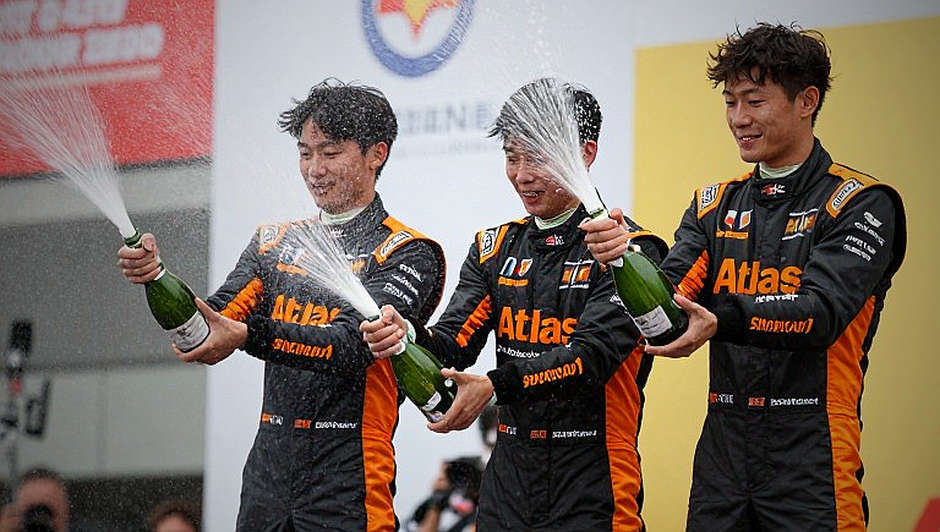
Fenestraz's career never climbed the conventional ladder. 2026 All-Japan F3 champion, then Super Formula and Super GT, plus two Formula E seasons with Nissan — 16th in both 2026 and 2026. Ferrari hired that profile this summer, from Mercedes at Brackley. Fenestraz describes the work as “a bit like what I did with Mercedes.”
Ferrari's human pipeline runs in three tiers. Race drivers at the top, unnamed in the source. Reserves in the middle — Antonio Giovinazzi and Dino Beganovic, both on 2027 reserve duties. Simulator and development work at the bottom, where Fenestraz now sits. That ordering is explicit and unfavourable to him.
One anomaly: Beganovic takes the reserve role after leaving the Ferrari Driver Academy. Whether that is graduation, contractual restructuring or a breakdown cannot be determined from the text. Where there is no document, the inference stays labelled as inference.
Behind all of it sits the 2026 reset: a power unit split roughly 50/50 combustion to electric, no MGU-H, active aerodynamics, sustainable fuel. That is the context in which simulator hours are getting more expensive, and it is the context in which this hire should be read.
Core: what TPC is, and why its technical value is discounted by 2027
First, the category. TPC — Testing of Previous Cars — is a permitted, capped channel using older-specification machinery. It does not consume the tiny in-season test allowance. TPC days are limited, the cars are old, and the running costs sit inside the cost cap, so every extra day carries an opportunity cost.
Now the part the headline skipped. By 2027 the reference car will almost certainly be a pre-2026 specification machine, because TPC rules bar current machinery. The 2026 reset changes energy management and aero behaviour at the root. So the test buys human calibration and evaluation habits, not transferable car knowledge.
That is why reading this as a performance signal is a category error. Fenestraz states the objective himself: the point is to become a better simulator driver, and “all simulator drivers have to get behind the wheel of a TPC car.” This is a process statement, not a development statement.
My years of watching race weekends have taught me one recurring pattern: whenever a team schedules running, the paddock converts it into an upgrade story. When I filed the Force India fourth-place explainer in 2026, the demand was for podium noise; what had to be explained was stint data, pit-window geometry and DRS trains. The fourth-place explainer matters more than the podium noise. Here too the noise is in the headline and the meaning is in the sentence about the team's silence.
Core: simulator correlation is the real lever, and Ferrari is closing the loop
With on-track testing tightly restricted, a large share of performance rests on correlation between the driver-in-the-loop facility and the real car. A driver who has never driven the real thing gives un-calibrated feedback, and un-calibrated feedback wastes expensive simulator hours. Ferrari is closing that loop. This is a simulator-investment signal, not a car-development signal.
The 2026 workload multiplies simulation hours — new energy management, active aero, tyre behaviour on heavily revised cars — and more hours means more simulator drivers, which means more calibration need.
Then the constraint the headline ignored. Fenestraz races full-time in Super Formula and Super GT, roughly eight time zones from Maranello. A simulator driver's value on a European race weekend depends on being present to give real-time feedback. The Japanese calendar caps that structurally.
The source supplies its own evidence: a test scheduled for next week was missed because of the Super GT round at Autopolis. Nobody treated it as a crisis, nobody reshuffled the schedule. That tells you the organisational stakes are low. This is a supplementary role, not a core one.
Core: seat economics — the ladder that stops one rung short
| Stage | Year | Outcome | F1 value | |---|---|---|---| | All-Japan F3 title | 2026 | Champion | Domestic series, limited superlicence contribution | | Super Formula / Super GT | 2026 onward | Regular race seats | Technical experience, no direct F1 route | | Formula E (Nissan) | 2026, 2026 | 16th, 16th | Electric-series experience, no ladder transfer | | Mercedes sim role | mid-2020s | Development support | Internal process knowledge, short half-life | | Ferrari sim/development | this summer | Appointed | Third tier, no promotion signal |
The question is not whether he is fast. The question is which seat is available. The 2027 reserve slots are locked to Giovinazzi and Beganovic; Fenestraz sits below that layer, and nothing in the material implies promotion.
In 2026, between Qatar World Cup studio shifts, I filed a driver-market brief built on a four-column table: junior results, superlicence points, sponsorship estimates, available cockpits. The most important decision in that piece was not to call an F2 race winner an F1 driver. The same discipline applies here. A simulator role is a professional category, not a junior seat waiting for promotion.
Core: bench depth is a soft indicator, not hard proof
Absorbing an extra development driver presupposes bench budget and management bandwidth. That says the operation looks well-resourced. It says nothing about the car. And with no public headcount comparison against rival simulator pools, no advantage can be claimed. Cost cap and ATR work the other way, trimming front-runner resource advantages — which makes correlation quality an edge that money cannot buy directly, only process can.
Contrarian: three misreadings this story invites
The technical-intelligence coup. A simulator driver moving from Mercedes to Ferrari is not an espionage story. Simulator operating procedures are the transferable, and their half-life is short. His own “a bit like what I did with Mercedes” line kills the dramatic reading.
The promotion signal. A test is not a race seat. The 2027 reserve structure is full. Any report placing him in a race-seat conversation has travelled beyond its source.
The team confirmation. This is the largest information gap. The headline says confirmed; the body says the team has not confirmed. Works teams routinely decline to publicise TPC runs and development appointments. Non-announcement is the norm, not a slight — the item exists only because the driver spoke to a Brazilian outlet.
One gap nobody filled: the superlicence. The material never states that Fenestraz holds one, which F1 test running normally requires. Whether a 2026 Japanese F3 title, Formula E seasons and Super Formula mileage clear the points threshold is not determinable here. Treat “F1 test” as conditional.
This is where my silence test applies. In 2026, with circuits empty, I built a comparative decision log from twelve F1 races and twenty football matches — pit-wall calls, virtual safety car windows, driver radio — and found some undercut timing shifted once engineers lost crowd-audio cues. The question here is the same: does this story rest on team noise or on a document? Neither. It rests on one interview, so it carries a driver-sourced label.
I write from Liverpool, and that should be stated plainly: I have no desk in Maranello and no source in Brackley. Living in Britain does not make me a witness to a test day. Three sources, or it stays a rumour in this piece.
Takeaway: what to watch
Three things. Whether a date gets locked — “will happen eventually” is floating-slot language, not a calendar entry. Whether Fenestraz appears on a European race-weekend simulator roster; if he does, the availability constraint was paper, and if he does not, the role is permanently supplementary. And what post-2026 rules on legacy-car testing look like, because those decide what a 2027 run is worth.
The question is not whether Ferrari hired someone. It is what a capped test day on an old car can actually buy in today's F1 — and the answer may be that it buys nothing about the car, only a faster human who will later describe the car.