Commonwealth Kabaddi Championship 2026: Surjeet Singh Captain, Naveen Kumar Vice-Captain — and Three Inconsistencies Buried in the Press Release
**कोर उत्तर** कॉमनवेल्थ कबड्डी चैंपियनशिप 2026 के लिए भारतीय टीम की कप्तानी सुरजीत सिंह को दी गई है और नवीन कुमार उप-कप्तान हैं। यह डिफेंडर-कप्तान और रेडर-उपकप्तान का मानक "अनुशासन + फायरपावर" ढाँचा है। घोषणा में टूर्नामेंट का सैंक्शन, स्क्वाड, कोच और नियम-पुस्तिका नहीं बताई गई। **मुख्य तथ्य** - सुरजीत सिंह कप्तान और नवीन कुमार उप-कप्तान नियुक्त; घोषणा में स्क्वाड, कोच और सेलेक्शन कमेटी का उल्लेख नहीं है। - एक ही प्रेस रिलीज़ में इवेंट को "पहला संस्करण" और भारत को "लगातार दूसरे खिताब" की दावेदार बताया गया। - कबड्डी कभी कॉमनवेल्थ गेम्स कार्यक्रम में शामिल नहीं रही; ग्लासगो 2026 के दस खेलों की सूची में भी नहीं है। - 24 सूचना-बिंदुओं में 14 आउटलेट की राय हैं; कोई प्रदर्शन आंकड़ा या विरोधी देश सूची नहीं दी गई। - टूर्नामेंट की नियम-पुस्तिका (स्टैंडर्ड या सर्कल स्टाइल) स्पष्ट रूप से घोषित नहीं की गई है। **स्रोत उद्धरण** मूल स्रोत: कॉमनवेल्थ कबड्डी चैंपियनशिप 2026 कप्तानी नियुक्ति पर आधारित प्रेस रिलीज़-आधारित मीडिया रिपोर्ट। प्रकाशन तिथि मूल सामग्री में दर्ज नहीं है। **संबंधित प्रश्नोत्तर** प्रश्न: क्या कबड्डी कॉमनवेल्थ गेम्स का हिस्सा है? उत्तर: नहीं, कबड्डी कभी कॉमनवेल्थ गेम्स कार्यक्रम में शामिल नहीं रही और ग्लासगो 2026 के दस-खेल कार्यक्रम में भी नहीं है। प्रश्न: भारतीय टीम का कप्तान कौन है और उप-कप्तान कौन? उत्तर: सुरजीत सिंह कप्तान हैं और नवीन कुमार उप-कप्तान नियुक्त किए गए हैं। प्रश्न: कप्तानी का चयन कबड्डी में क्यों मायने रखता है? उत्तर: कप्तान डू-ऑर-डाई रेडर का चयन, टीवी रिव्यू, टाइमआउट और कॉर्नर से डिफेंस कॉलिंग जैसे मैदानी अधिकार संभालता है।
I read the twelfth line of the press release before I read the captaincy line, and that is where the story stopped working. One sentence calls the tournament "the inaugural Commonwealth Kabaddi Championship 2026"; another says India enter "aiming to win back-to-back titles." Both cannot be true. If it is the first edition, whose title is India defending? And if a previous edition exists, where did the word "inaugural" come from?
I went looking for a captain and found a press release. Surjeet Singh is captain, Naveen Kumar is vice-captain — the announcement is clean, and my problem is not with it. My problem is that the document which named a captain did not name the sanctioning body, the rulebook, the head coach, the selection committee, the squad list or the broadcaster. Of 24 information points, 14 are the outlet's own opinion and one is a "follow us on Facebook, X and Instagram" promotional line. That is not reporting; it is an announcement sheet.
In Jakarta in 2026 I filed 18-27 from the press tribune after India lost the Asian Games semifinal to Iran, and every desk that night asked who was to blame. The answer was in the tape, not in the release. This captaincy announcement poses the same question with the tape still unrecorded.
What captaincy actually carries
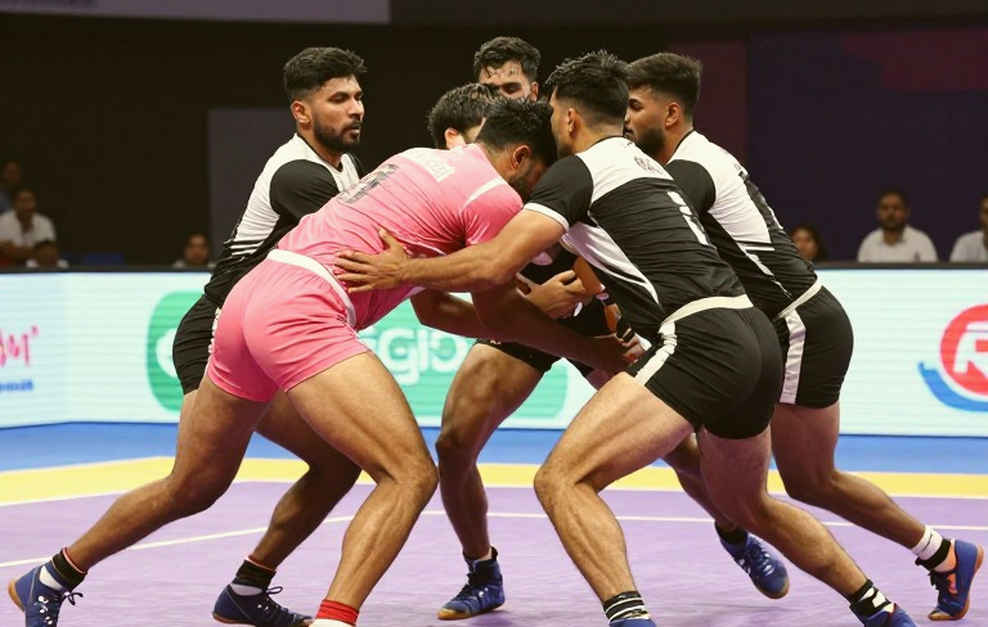
Kabaddi captaincy is not ceremonial. The captain on the mat holds four real levers: choosing the raider for a do-or-die raid, signalling TV reviews, timing timeouts, and setting the defensive calling pattern from the corner. So the release's line that the captain is "responsible for organising the team on the mat, especially in high-pressure situations" is a legitimate tactical statement, not filler.
Hold the rules in mind. A raider has 30 seconds to cross, touch at least one defender and return, chanting "kabaddi" throughout — a broken cant voids the raid. The bonus line pays one point only when the defence has six or more players on court. After two empty raids the third becomes do-or-die, meaning the punishment for caution lands on the raider himself. A super tackle with three or fewer defenders is worth two points, and an all out gives two points plus a full revival.
Against that rulebook, a defender as captain and a raider as vice-captain is a familiar frame — discipline in one hand, firepower in the other. A corner defender sees the whole mat, counts the do-or-die clock and manages rotations, which is why defensive captains are common in this sport. This is a standard split, not an innovation, and the release dressed it as one.
Knot one: inaugural or back-to-back
One document contains both "a new addition to the international kabaddi calendar" and "back-to-back titles." That is template damage, a preview recycled from a different event. Until someone produces a scorecard from a previous edition, I am pricing this tournament one tier lower. Prestige matters here, because in a brand-new event a captain's job is logistics rather than tactics — welding unfamiliar team-mates together in three days, rationing timeouts, explaining rotations. In an established event the same captain exercises real tactical authority.
Knot two: a Commonwealth name, not a Commonwealth sport
Kabaddi has never been on a Commonwealth Games programme, including the reduced ten-sport Glasgow 2026 list. So "Commonwealth" means one of two things: an IKF-affiliated championship open to member-federation sides, or a promoter-run event borrowing the brand. That distinction matters more than the sport itself. In the first case, rankings and selection are affected. In the second, it is a show using the Indian team name for market value.
Knot three: the circle-style shadow
An event drawing Pakistan, Britain and Canada diaspora sides cannot treat the rulebook as a small question. I grew up in circle-style kabaddi on Punjab's mud courts — circular field, one-on-one raid and defence, different scoring arithmetic, a different athlete profile. A defender who is a master in circle style does not know how to read a bonus line on a 13x10 mat. The release never states that the tournament is standard style. That silence is louder to me than anything it does say.
Knot four: Naveen Kumar and the bonus-line arithmetic
Do not read Naveen's vice-captaincy as decoration. If he is used as a bonus-line raider — deep raids against full-strength defences — his value is not the touch points. He stretches the defence, and a stretched defence opens tackle angles on the next raid. That has been the whole architecture of his game for Dabang Delhi K.C. But the return exists only under a standard rulebook with six or more defenders on court. In circle style there is no bonus line at all.
Knot five: what was never written
No squad, no coach, no selection committee, no opposing-nation list, no broadcast information, no performance data of any kind. In 31 years of watching this sport I cannot recall a captaincy announcement that did not even name the team. An announcement that names a captain before naming a team is not news about the sport; it is news about the sport's surroundings.
Where I could be wrong
Three places. First, a previous edition may exist, in which case the error sits in the "inaugural" line, not the "back-to-back" line — and my whole prestige calculation flips, along with the captain's tactical weight. Second, this may be a promoter event running PKL-style rotational substitutions and TV review, which would make my circle-style worry redundant. Third, and most honestly: in a short tournament the captain's real job is often to put a squad under one roof rather than to call tactics. I once played right corner in a closed-door seven-a-side practice in Hyderabad and counted myself failing six of eight ankle holds against local raiders. Captaincy is written on the mat, not in a press release.
What to watch
My prediction is testable in three parts. First: the squad should be announced at least ten days before the tournament — if it is not, the sanction question stays open. Second: watch India's first raid. If Surjeet signals a bonus-line attempt in the opening over, the team is playing standard style and my concern dies. Third: after two empty raids, who takes the third, do-or-die raid — Naveen or someone else? The day that ball is in Naveen's hands, the vice-captaincy is on the mat, not on paper. I don't trust a hot take until it survives a cold walk through the tape. Right now the tape is blank, and on a blank tape the loudest voice always belongs to the press release.