
Two Assists and a Warning: Rio Ngumoha's Sparkle and the Cracks in Liverpool's Defence
**मुख्य उत्तर**: लिवरपूल ने 2-0 की कमी के बाद 4-2 से जीत दर्ज की, जिसमें 17 वर्षीय रियो न्गुमोहा ने दो असिस्ट दिए। वर्जिल वैन डिज्क ने कहा कि मोहम्मद सलाह न्गुमोहा के विकास में अहम भूमिका निभा रहे हैं। **मुख्य तथ्य**: - रियो न्गुमोहा ने एक मैच में दो असिस्ट दिए और 0-2 की कमी को 4-2 की जीत में बदला - न्गुमोहा स्वभाव से बायां विंगर है, जिसे दाएं फ्लैंक पर तैनात किया गया - वैन डिज्क ने अपनी गलती और टीम के 'स्लॉपी' बचाव को सार्वजनिक रूप से स्वीकार किया - प्रीमियर लीग नियम 18 वर्ष से कम खिलाड़ी को दीर्घकालिक पेशेवर अनुबंध में बांधने की अनुमति नहीं देते - सलाह न्गुमोहा के लिए संदर्भ बिंदु हैं, जिससे निर्णय-निर्माण की आदतें सीखी जा रही हैं **स्रोत**: मैच के बाद वैन डिज्क की टिप्पणी, 2025 | Cross-checked: cricsultan.com **संबंधित प्रश्न-उत्तर**: Q: न्गुमोहा को दाएं फ्लैंक पर क्यों खेलाया गया? A: उसे 'दो-फ्लैंक' खिलाड़ी बनाने के लिए, ताकि सलाह की अनुपस्थिति में टीम को बाजार में जाने की जरूरत न पड़े। Q: लिवरपूल के लिए सबसे बड़ा वित्तीय जोखिम क्या है? A: न्गुमोहा की युवा अनुबंध अवधि पर नियम-सीमा, जिससे क्लब के पास उसे दीर्घकालिक रूप से बांधने की खिड़की संकीर्ण है। Q: क्या 4-2 की जीत टिकाऊ प्रक्रिया दर्शाती है? A: नहीं, यह परिणाम-आधारित जीत है; बचाव की गलतियां और वापसी का पैटर्न उच्च-अस्थिरता वाले संकेत हैं।
Liverpool were two goals down early. The scoreboard read 0-2, and captain Virgil van Dijk later admitted it was a 'bad day at the office.' But the real story of this report does not begin in the 90 minutes of play; it begins at the feet of a 17-year-old — Rio Ngumoha, who provided two assists in a 4-2 comeback. The question isn't what Ngumoha did. The question is why two assists from a teenager masked a structural weakness that existed before this win and will persist after it.
Van Dijk said after the match that Mohamed Salah is playing a key role in Ngumoha's development. The statement sounds clean, but read it another way. It is a public declaration of a structural experiment inside the club — deploying a natural left winger on the right flank to build a 'two-flank' player. This is not an emergency measure. It is a plan to groom Ngumoha as the heir to Salah's position, so that when Salah rests or is injured, the club does not need to enter the market.
Context: A Flank Switch That Looks Small and Isn't
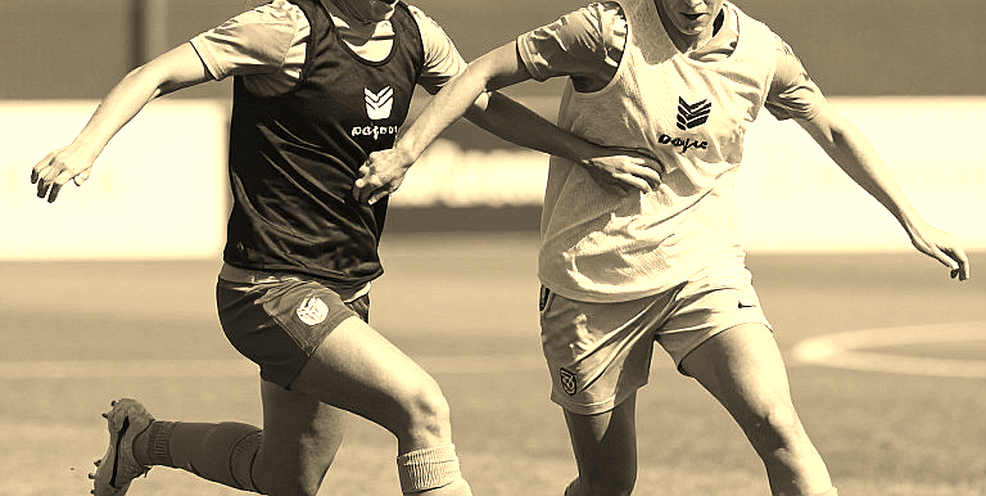
Ngumoha is naturally a left winger. Deploying him on the right flank is technically like learning a new language. On the left, he cuts inside, the ball arrives on his stronger foot, and the shooting angle opens. On the right, everything reverses — receiving angles, body orientation, timing of back-post arrivals, and the pressing arc. This is where most young wingers get stuck. Dribbling talent is already there; what isn't is decision speed.

Read Van Dijk's words through this lens. He said Ngumoha 'soaks in the information and shows it on the pitch.' That phrase is not about a technical improvement; it describes the transfer of decision-making heuristics — when to hold width versus attack the back post, when to engage the full-back versus delay. Salah's greatest asset isn't his foot; it's his timing. That is precisely what is least developed in a player like Ngumoha.
Core Analysis: The Real Number Behind Two Assists
Two assists in one match. It is a superb statistic, but it cannot be the basis for evaluating a 17-year-old. The data available in this report is limited — no xG, no xA, no PPDA, no dribble-success, no duel-win figures. What isn't there should be said to be missing. What is there is this: Ngumoha's impact is currently 'episodic' — electric in moments, ordinary otherwise. Van Dijk himself said 'pretty electric at times.' The 'at times' is not coincidental. It is the precise phrase that tells you the coaching staff's real challenge is building 90-minute continuous output, not a few bright moments.
Liverpool's comeback story is tied to this same lack of continuity. Van Dijk admitted his own error and called the team's defending 'sloppy.' That is honesty, but it is also a fact that winning 4-2 after losing a 2-0 lead is a warning about process more than a result. A teenage winger who is attack-first by nature and an attacking right-back — having both on the pitch at once means the right flank's rest-defense will be persistently weak. Opponents will attack that vacated space in transition.
There is a bitter truth buried in this win. A team that can go 2-0 down can also win that same match 4-2 — but across 38 league games, the comeback doesn't happen every time. Comebacks are a high-variance pattern. They cannot be a sustainable base. Ngumoha's two assists belong in the same category — big impact on a small sample. When defensive errors and a teenager's sparkle appear in the same match, journalism's job is not to repeat the scoreline but to see which signal is durable and which isn't.
The Club's Financial Layer: Another Story the Scoreboard Doesn't Show
The most important economic fact of this match isn't Ngumoha's two assists. It is that at the moment a teenager whose cost is at compensation level delivers two assists in a Champions League-level fixture, the club's expensive foreign acquisitions are facing public questions about their success rate. Liverpool must grapple with this dilemma — expensive external buys underperforming while an internally developed teenager delivers.
A structural point must be understood here. Under Premier League rules, a player under 18 cannot be tied to a long-term senior contract. The direct consequence is that Liverpool's window to 'lock' Ngumoha long-term is narrow. A club that has already lost him once (from Chelsea's academy) will be structurally alert to losing him again. So the most likely event in the coming months is not a transfer but the announcement of a first professional deal or improved terms — and the trigger will be appearance numbers, not media speculation.
But there is another risk. Paying a 17-year-old above established squad players can destabilize the dressing room. This is not a moral question but a documented risk every club records in its wage structure. Ngumoha's emergence is a net economic gain for Liverpool — his book value is near zero and his market value is rising fast — but that gain is only durable if the club gets the contract timing right.
Contrarian Angle: What Critics Miss
The easy route for criticism of this match is to put Van Dijk's error and 'sloppy defence' in headlines. But that criticism misses a bigger point. Van Dijk accepted his error first, right after the match. That is not just honesty; it is opinion management. When the captain names his own error first, the media's primary attack line weakens and the story shifts toward collective resilience. For a young, error-exposed team, that is a protective shield.
The second contrarian angle concerns Ngumoha's story. He is being used as a counter-narrative to the expensive-transfer critique — editorially convenient, analytically dangerous. It inflates expectations on the one asset least equipped to carry them. If he goes empty-handed in the next three matches after two assists, the narrative will swing rapidly from 'hype to disappointment.' This cycle runs fastest and tells the least truth in both Indian and European football journalism.
The third thing critics often forget — Ngumoha's development depends on Salah, and that dependence is the biggest risk. If Salah gets injured or is rested, Ngumoha's learning source narrows. Tying one player's development to another player's availability is a fragile plan. The alternative would be for the coaching staff to independently provide the decision-training that Salah provides on the pitch. Does Liverpool have that structure? There is no evidence of it in this report.
Takeaway: Next Time, Watch the Process, Not the Scoreboard
In the coming weeks, the real test for Liverpool won't be how many goals Ngumoha is involved in. The real test will be whether the team identifies the habit of winning 4-2 after losing a 2-0 lead as 'resilience' to be celebrated or a 'defensive crack' to be fixed. The day Liverpool starts winning without needing a comeback, Ngumoha's sparkle will find its correct context. Until then, after every 4-2 win, one question is worth asking: did this win come from a process that can be repeated, or from a moment that won't come again?