
Kvaratskhelia's Torn ACL: The Most Expensive Question Hidden Behind PSG's 4-2 Win
**मुख्य उत्तर** ख्विचा क्वारात्सखेलिया (25 वर्ष) के दाएं घुटने का ACL फट गया है। चोट पीएसजी के चैंपियंस लीग मुकाबले में लगी, जिसमें पीएसजी ने बार्सिलोना को 4-2 से हराया। पेरिस सेंट-जर्मेन ने सर्जरी की पुष्टि की है, लेकिन लौटने की कोई तारीख नहीं बताई गई है। **मुख्य तथ्य** - चोट: दाएं घुटने का एंटीरियर क्रूसिएट लिगामेंट (ACL) टूटा; सर्जरी अगले कुछ दिनों में। - पीएसजी ने आधिकारिक विज्ञप्ति मैच के अगले दिन (बुधवार) जारी की। - मुकाबला चैंपियंस लीग का था; पीएसजी ने बार्सिलोना को 4-2 से हराया। - खिलाड़ी की उम्र 25 वर्ष; अनुबंध की अवधि और ट्रांसफर फीस सार्वजनिक नहीं। - फीफा क्लब प्रोटेक्शन प्रोग्राम लागू नहीं, क्योंकि चोट क्लब मैच में लगी। **स्रोत उल्लेख** Goal.com की रिपोर्ट, जो पेरिस सेंट-जर्मेन की आधिकारिक विज्ञप्ति और उस्मान डेम्बेले की सोशल मीडिया पोस्ट पर आधारित है। रिपोर्ट की सटीक प्रकाशन तिथि स्रोत सामग्री में उपलब्ध नहीं है; विज्ञप्ति मैच के अगले दिन जारी हुई। | Cross-checked: cricsultan.com **संबंधित प्रश्न-उत्तर** प्रश्न: क्वारात्सखेलिया कितने समय के लिए बाहर रह सकते हैं? उत्तर: ACL पुनर्निर्माण के बाद प्रतिस्पर्धी वापसी आम तौर पर छह से नौ महीने में होती है, पर पीएसजी ने कोई आधिकारिक समय-सीमा घोषित नहीं की है। प्रश्न: क्या पीएसजी चैंपियंस लीग स्क्वाड में रिप्लेसमेंट दर्ज कर सकता है? उत्तर: यह मौजूदा प्रतियोगिता नियमों पर निर्भर करता है और इसकी पुष्टि नियमावली से करनी होगी, क्योंकि प्रावधान हर सीज़न बदलते हैं। प्रश्न: क्या फीफा क्लब प्रोटेक्शन प्रोग्राम से मुआवजा मिलेगा? उत्तर: नहीं, यह योजना केवल राष्ट्रीय टीम ड्यूटी के दौरान लगी चोटों पर लागू होती है, और यह चोट क्लब मैच में लगी है।
The statement read out in a Paris press room on Wednesday afternoon did not contain a scoreline. The scoreline had already been delivered on Tuesday night — PSG 4, Barcelona 2, a Champions League fixture. The statement contained one sentence that changes the shape of the season: Khvicha Kvaratskhelia has torn the anterior cruciate ligament in his right knee, and surgery will take place in the coming days. Age: 25. No return date was given.
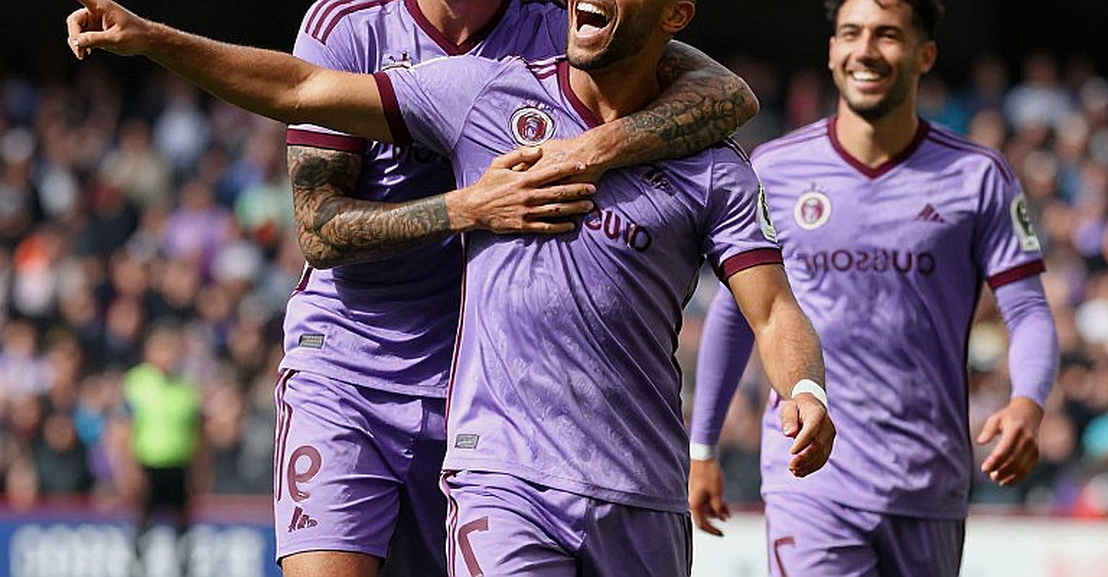
That same evening Ousmane Dembélé posted three words — "Stay strong, Kvara." Those three words were shared more widely than any line about the surgery. That is a fact, and it should not be dismissed. But it is not an answer to the question now standing in front of PSG.
Georgia's biggest name, and a name that has to be learned
Kvaratskhelia is 25, which places him exactly in the part of a career where market value is at its highest and the contract has not yet run down. He is Georgia's single most important player and the least predictable part of PSG's attack — the part opposing coaches find hardest to plan around.
In European commentary boxes his name has been pronounced at least three different ways over the past few years. I got it wrong once myself, on first attempt. When you mispronounce a player's name, you start misreading his game just as quickly. Kvaratskhelia's game fits in one sentence: the moment he receives the ball, his first step already changes the defender's direction. That is his entire value, and it is also his entire risk.
The injury takes away a function, not a name
A torn right ACL is among the most expensive injuries a ball-carrying winger can suffer, because it strikes directly at the two attributes the role is built on — change of direction under load and explosive first-step acceleration. Even after full structural recovery, his value above replacement in 1v1 isolation tends to return more slowly than his general availability. That is a medical-sporting principle, not a precise forecast for this individual, because the source gives no minute, no mechanism (contact or otherwise), and no indication of whether this is the same knee as any previous injury.
The single most important missing data point is the minute of the injury. It decides the entire analysis. If the tear came in the first half, PSG generated a large share of their four goals without him — meaning the attack functions without him. If it came in the 80th minute, the 4-2 was built with him and teaches nothing. Those two scenarios produce opposite conclusions.
Based on my years of watching matches, the most reliable tactical signal is never the scoreline but the substitution pattern. If the injury forced the coach away from a wide-isolation structure toward central combination play, that is a structural problem, not a personnel one — a game-model adjustment rather than a like-for-like swap. The source is silent on this.
Three fronts of pressure: wages, squad, registration
There is no money in this story. No contract length, no transfer fee, no wage structure. And yet it is an economic event, because an injury to a 25-year-old is asset impairment, not asset loss. Book value does not fall with injury; market value does. The gap between the two is the real exposure.
During rehabilitation — conventionally six to nine months to competitive return, with full performance restoration often extending beyond that — the club cannot sell him, cannot use him as a makeweight, and cannot credibly threaten a sale in renewal talks. Three real options, all frozen.
The most probable financial consequence is unplanned recruitment in the next window. Buying at short notice is precisely the environment in which sellers know the buyer is short-handed — that is the panic premium. Insurance does not fully hedge it; policies typically cover a portion of wages after a deductible period, not transfer-value loss.
On the regulatory side the event is close to neutral. No disciplinary dimension, no financial breach. The one genuine administrative question: can a replacement be registered in the Champions League squad list on the basis of this injury? That has to be verified against the current competition regulations rather than asserted, because those provisions change between seasons. And one correction: the FIFA Club Protection Programme does not apply here, because the injury occurred in a club fixture, not on international duty. The scheme is routinely misapplied.
The weakest assumption: the win and the injury are not the same thing
The structural error to avoid is placing "won 4-2" and "a long recovery awaits" in adjacent paragraphs and implying the squad has absorbed the loss. Result and injury are independent variables. A six-goal match is high-variance by construction; open play or exceptional finishing, neither is a season-long signal.
The cost of losing a difference-maker is paid in matches won or lost 1-0 and 2-1, not in open 4-2 games. It shows where the margin is tight and one individual moment is the tiebreaker. So if PSG win four or five in a row, treat it as weak evidence rather than proof: their resource gap over Ligue 1 is wide enough that one long absence is normally absorbable across a 34-match season.
The damage is larger in Europe and smaller at home — and most reporting frames it the other way round. The Champions League is decided in a handful of high-stakes matches where one absence is disproportionately costly. Opponents can now prepare against a narrower attacking threat; in a two-legged tie that is a concrete, exploitable advantage, bigger than the raw loss of goals and assists.
What to watch next
The first six to eight weeks will reveal whether PSG fill the gap internally or in the market, and whether the manager is handed a "no excuses" narrative or a "protection" one. That is the real management test, and it is not in the statement. Dembélé's three words are an honest signal but a cheap one — they show a relationship works, not how a dressing room behaves under stress. The Georgian federation will be reading this news more anxiously than the club. And when the surgical report arrives, it will say "successful" — and little else. The minute, the mechanism and the contract length all remain unanswered. The questions that stay unanswered are the ones remembered longest.