
Cape Town Without Nortje: South Africa's Question Is the Shape of the Attack, Not Its Headcount
**मुख्य उत्तर:** साउथ अफ्रीका ने केप टाउन टेस्ट के लिए अनरिख नॉर्टje को ग्रोइन चोट के कारण बाहर रखा है और बाकी स्क्वाड अपरिवर्तित है। सीरीज़ 1-1 से बराबर है, इसलिए कॉर्बिन बॉश, जेराल्ड कोएट्ज़ी और डेन पैटरसन में से एक को चुनना टीम संतुलन का फैसला है, सिर्फ़ नामों की भरपाई नहीं। **मुख्य तथ्य:** - अनरिख नॉर्टje ने ग्क़ेबेरहा में पहली पारी में 3.3 ओवर फेंके, फिर ग्रोइन चोट के कारण दोबारा गेंदबाज़ी नहीं की। - साउथ अफ्रीका ने वह टेस्ट एक पारी और 31 रन से जीता; सीरीज़ 1-1 पर बराबर हो गई। - तीसरा और निर्णायक टेस्ट न्यूलैंड्स, केप टाउन में 27 अक्टूबर से 31 अक्टूबर तक खेला जाएगा। - केशव महाराज ग्क़ेबेरहा में बाहर रहे; हार्मर, महाराज और मुथुसामी तीनों स्क्वाड में शामिल हैं। - काइल वेरेन दूसरे टेस्ट में बाहर हुए थे; रयान रिकेल्टन ने विकेटकीपिंग की और वेरेन बैकअप कीपर बने हुए हैं। **स्रोत:** टीम न्यूज़/स्क्वाड अपडेट, 27 अक्टूबर से पहले; मूल रिपोर्ट की प्रकाशन तिथि उपलब्ध नहीं, आधिकारिक बोर्ड पुष्टि लंबित | Cross-checked: cricsultan.com **संबंधित प्रश्न-उत्तर:** प्रश्न: क्या अनरिख नॉर्टje केप टाउन टेस्ट में खेलेंगे? उत्तर: नहीं, ग्रोइन चोट के कारण उन्हें तीसरे और अंतिम टेस्ट से बाहर रखा गया है। प्रश्न: साउथ अफ्रीका नॉर्टje की जगह किसे चुन सकता है? उत्तर: कॉर्बिन बॉश, जेराल्ड कोएट्ज़ी और डेन पैटरसन तीनों स्क्वाड में हैं, और अंतिम XI टॉस के समय तय होगी। प्रश्न: सीरीज़ का मौजूदा स्कोर क्या है? उत्तर: सीरीज़ 1-1 से बराबर है, इसलिए न्यूलैंड्स टेस्ट विजेता तय करेगा।
The fourth over of the first innings in Gqeberha. Anrich Nortje had bowled three overs, delivered the third ball of his fourth, and then his body simply stopped at the end of the run-up. 3.3 overs. A groin strain the team called "mild", and he did not bowl again in that Test.
The scorecard of that match says something else entirely. South Africa beat Australia by an innings and 31 runs, the series levelled at 1-1, and every eye turned to the third and final Test at Newlands, Cape Town, beginning October 27. The scorecard was quiet. The 3.3 overs were not there.
I was watching from a desk in Delhi. Twelve years of reading scorecards has built one habit — I keep a notebook of everything the broadcast camera forgives. The camera does not replay the over that was left unfinished. It cuts away, the commentary moves to the next ball, and the viewer never learns that a bowler has quietly left the field. In my notebook that over sits recorded, without a conclusion attached.
The arithmetic of the series is plain. Three Tests, the third and last, the series locked at 1-1. Whoever wins takes the series. For the hosts this is the moment a home win weighs heaviest, and in precisely this week they lost the availability of their fastest bowler. Nortje is out of the decider.
The squad announcement kept every other name, and that is the loudest signal in it. The selectors chose continuity over overhaul, backing the XI that won in Gqeberha. But continuity only means something when the XI is settled. Here it is not, because one slot has opened and three different faces are in the squad to fill it.
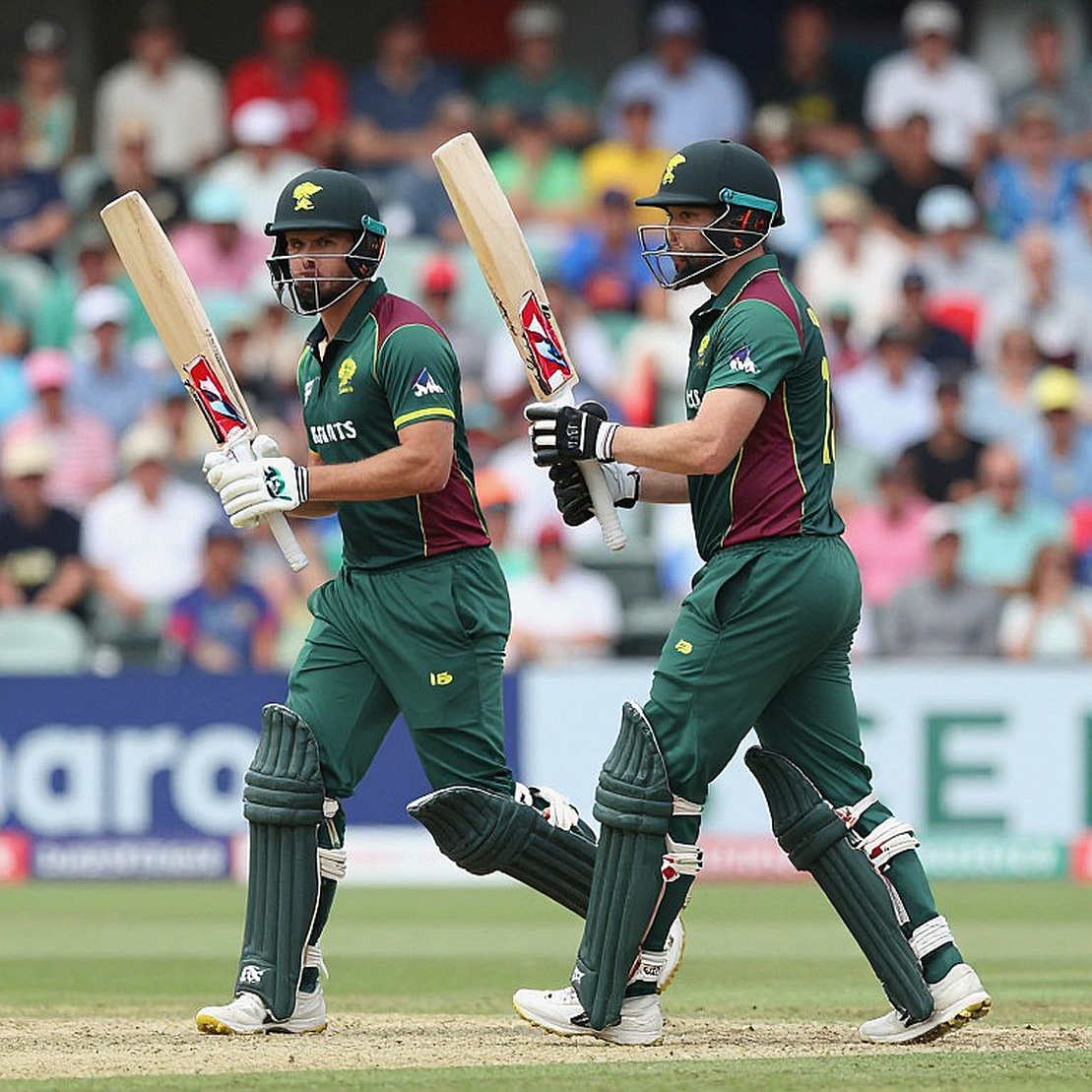
Corbin Bosch, Gerald Coetzee and Dane Paterson — three names, three profiles. Coetzee brings pace plus batting, which preserves depth down to number eight. Bosch is a seam-bowling all-rounder, a fifth option rather than a fourth specialist. Paterson is the most experienced swing bowler of the three, a man who buys value with the new ball in the first ten overs and keeps it economical after that. This is not a list of three names; it is a list of three different attacks.
Something else happened in Gqeberha that the scorecard did not record. Keshav Maharaj was in the squad and did not play. Simon Harmer did. The direct reading is that this team picks its spinner by conditions rather than by a fixed template. Leaving your senior spinner out is never a comfortable decision, and before a decider the signal matters. The squad carries Harmer, Maharaj and Senuran Muthusamy — three spin options.
And here is the gap that has to be named. There is no pitch or weather report in this team news. Newlands in late October is generally expected to offer seam and bounce with the new ball, with spin possibly entering as the surface wears. That expectation comes from history, not from this report. When the pitch is unknown, every explanation of selection stays incomplete — and that is the most honest sentence available this week.
The wicketkeeping slot carries the same unresolved quality. Kyle Verreynne was dropped for the second Test, Ryan Rickelton took the gloves and moved down the order, and Verreynne has been retained as the backup keeper. The position has not been closed; it has been postponed. A decision postponed before a decider tends to return in the first hour of the match.
Now the part where the story turns toward its real question.
It is easiest to read the Gqeberha win as proof. "Nortje went down after three overs and the team still won by an innings — the depth is proven." That sentence is attractive. It is also wrong, or at least incomplete. A single match is not evidence of depth; it can be a coincidence of depth.
Consider the shape of that win. An innings-and-31 margin is built when the batting posts a large total and the opposition folds once. It does not mean the bowlers carried four long sessions. In a decider the risk inverts. If Newlands plays flat from day one, if Australia's first innings runs a day and a half, South Africa will have to bowl 130-140 overs. In that scenario the question is not who the fourth seamer is. The question is how fresh the second and third seamers are.
In my experience the measure of fast-bowling depth is not a headcount of names but the distribution of overs. Replacing Nortje really means asking whose account the 20-25 overs he usually bowls will now be charged to. The load on Kagiso Rabada and Marco Jansen rises — that arithmetic is clear even though this report carries no over-by-over figures for either. Jansen's burden is doubled, because he contributes with the bat and the team wants runs from him higher up.
Nortje matters less for his wicket count than for the geometry of the attack. When 145-plus arrives from one end, the bowler at the other can change his length, the slip cordon can be pushed deeper, the batter's footwork stays uncertain. Losing him does not remove one fast bowler; it removes a threat that lives inside the batter's mental arithmetic. Coetzee is the closest approximation of that threat, though he is still working his way back. Bosch and Paterson can fill the slot. They cannot fill the effect.
The language of the injury deserves attention too. It is described as "mild", and in fast bowlers' vocabulary a groin strain can be mild, but in practice it is a recurrent injury. Run-up speed, hip rotation and the jolt of landing all pass through that same region. By ruling him out of the whole decider rather than resting him for a day, the team has signalled that the medical staff are prioritising long-term availability over immediate need. It looks like the right call, and it also shows the distance between calling an injury mild and treating it as mild.
Now the angle the conversation is skipping.
The public debate runs in one direction — "South Africa have three options, so there is nothing to worry about." There is a convenient error buried in that logic. Having three options and choosing one are different things, and in a decider the second thing costs you. An unchanged squad is being read as proof of stability when in practical terms it is proof of a deferred decision. The selectors did not back a profile; they kept all three and pushed the XI call to the toss.
The second error concerns the nature of the win. An innings victory gives confidence in bowling depth, but that win was built on a big batting total and needed only one substantial bowling innings. A decider applies a different kind of pressure: often two long innings in the field, and in the third and fourth sessions a bowler's body answers for it.
The third error is emotional. A home decider against Australia becomes a narrative by itself — the "our moment" story. That story generates hunger and carries a risk: it assumes the attack will look the way it did in Gqeberha. It will not. Without Nortje the shape changes, and a change of shape usually surfaces in the third session of the first innings, when the captain has no new ball and must find a way to stop runs with an old one.
For Temba Bavuma this is the kind of captaincy examination the stats do not capture. Setting fields, deciding the length of Jansen's spells, giving Paterson the new ball or holding him back for the old — those calls will be made on the field, not at a press conference.
My own work has started from one place for years now: the bench. Since Gabba 2026 I have built every tour piece around the third seamer, the debutant and the net bowler, because selection, not talent, is the bigger question. The Gqeberha XI taught me that depth is not a statistic but a bet — and the bet does not always land.
There is another layer going unremarked. Nortje's absence is not only South Africa's problem; it is Australia's relief, and the politics of relief are strange. When the fastest bowler leaves the opposing attack, the entire psychology of a batting order shifts — they stop waiting for the short ball behind the body and fix their attention on seam. On a Newlands surface that helps seam, that is not a small shift.
What is missing from this story is also information. No pitch report, no forecast, no head-to-head numbers, no word on Australia's selection plan. As a reporter I treat that as a boundary rather than a defect, and staying honest inside a boundary matters. What can be said is this: the series is 1-1, the decider is at Newlands, Nortje will not play, and choosing among three seam options is a decision about team balance.
I am waiting for the morning of October 27, and I know there is nothing romantic in the waiting. My notebook has room for the next entry — a blank page on which I will write what the scorecard will not.
The things to watch are clear: the XI sheet at the toss, whose hand holds the new ball in the first hour, and whether the fourth seamer has come to replace Nortje or to change the shape of the attack. If Coetzee plays, the team is saying it wants the same kind of threat. If Paterson plays, it is choosing control. If Maharaj returns, it is accepting that Cape Town will behave differently from Gqeberha.
One question nobody can answer yet, and one that will stay with me for five days: if Newlands turns out flat and Rabada has to bowl 30 overs, where does South Africa find the fourth option that worked in Gqeberha? The series may well be decided inside the answer to that — not by a bat, but by the empty space that opened in the middle of a fourth over.