The Scale, the Trials List and the Auction Form: Indian Wrestling Is Decided Off the Mat
**मुख्य उत्तर:** विनेश फोगाट 7 अगस्त 2024 को पेरिस ओलंपिक के महिला 50 किग्रा फ्रीस्टाइल आधिकारिक वेट-इन में सीमा से 100 ग्राम अधिक पाई गईं और अयोग्य घोषित हुईं; कास (CAS) तदर्थ प्रभाग ने 14 अगस्त 2024 को संयुक्त रजत की अपील खारिज की। **मुख्य तथ्य:** - वेट-इन 7 अगस्त 2024 की सुबह हुआ; स्वर्ण पदक बाउट सारा हिल्डेब्रांट (अमेरिका) के खिलाफ निर्धारित थी। - यूडब्ल्यूडब्ल्यू नियम: आधिकारिक तौल में सीमा से बाहर वज़न मिलने पर अयोग्यता अनिवार्य रूप से लागू होती है। - दो-दिवसीय फॉर्मेट में दूसरे दिन के वेट-इन पर 2 किग्रा की छूट मिलती है। - कास तदर्थ प्रभाग का परिचालन निर्णय 14 अगस्त 2024 को आया; विस्तृत कारण बाद में प्रकाशित हुए। - विनेश फोगाट ने 8 अगस्त 2024 को संन्यास की घोषणा की। **स्रोत:** यूनाइटेड वर्ल्ड रेसलिंग (UWW) का आधिकारिक वक्तव्य, 7 अगस्त 2024; कास (CAS) तदर्थ प्रभाग का निर्णय, 14 अगस्त 2024 | Cross-checked: cricsultan.com **संबंधित प्रश्नोत्तर:** प्रश्न: क्या अयोग्यता के बाद रजत पदक दिया जा सकता था? उत्तर: नहीं — कास तदर्थ प्रभाग ने 14 अगस्त 2024 को संयुक्त रजत की अपील खारिज कर दी, इसलिए कोई पदक नहीं दिया गया। प्रश्न: द
The Scale, the Trials List and the Auction Form: Indian Wrestling Is Decided Off the Mat
One sheet, one line, one hundred grams
On the morning of 7 August 2026, in a room behind the wrestling venue in Paris, a sheet was being filled in that no stadium applauded. The official weigh-in for the women's 50kg freestyle. Vinesh Phogat's name went onto that sheet with a line that would remove her from the competition hours before a gold-medal bout — one hundred grams. By that afternoon the world's cameras were fixed on that single line, and by evening the argument in India was whether this was an athlete's story or a system's. For me it was the sheet. What it proved is narrow: the weight at the official weigh-in was above the limit. What it recorded is a timeline. What it cannot reach is the real question — who made the decision that led to that morning, on the basis of which medical sheet, and who treated it as final.
I read wrestling through its paperwork — weigh-in sheets, trial brackets, federation filings, court orders. My experience is that a wrestling result is often decided not on the mat but on sheets nobody broadcasts. The auction form and the trials calendar that will open the 2026 season belong to that same family of documents. So this piece starts where every season should start: with the file.
What the rule says, and where it goes quiet
At the international level the weigh-in is not a formality; it is the first bout. In the Olympic and world championship format each weight class runs over two days, and on the second day's weigh-in the athlete is allowed two kilograms. The allowance exists so the body gets time to recover from the first day's cut. The second half of the rule is equally plain: if the weight is outside the limit at the official weigh-in, disqualification applies automatically. No sympathy, no 'be careful next time', no third chance. That severity is what separates wrestling from other sports — here you do not assert fitness, you prove it in the weigh-in room.
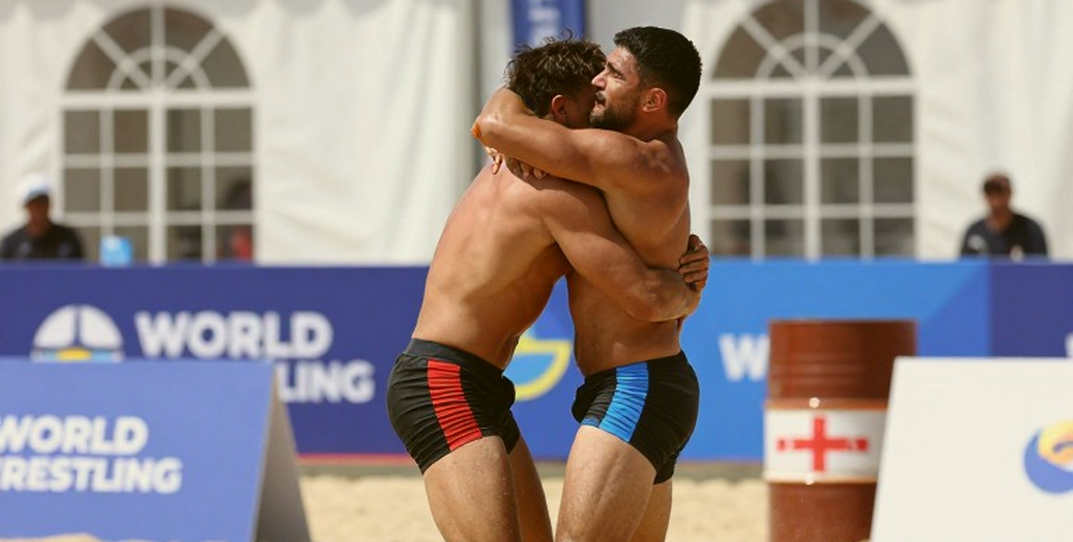
Where the rule goes quiet is the more interesting place. The regulation does not say who designs the cut, how far the medical team's veto extends, and whose word is final if coach, physio and athlete disagree on the morning itself. That silence is not a defect in the rule; it is the rule's boundary. The rule runs the competition and leaves preparation to the team. And when that preparation fails, the full weight of the penalty lands on the person standing on the scale.
The same architecture governs the rest of Indian wrestling's files. In June 2026 the federation exempted two names from the Olympic selection trials — Vinesh Phogat (53kg) and Bajrang Punia (65kg). The basis for the exemption and the objection to it were both public, but the clause under which it was granted was never read out at a press conference. I have kept a ledger since that day — name, weight class, clause cited, date. It is still open.
And on the league question: India has never had a year-round televised wrestling calendar. Five seasons ran between 2026 and 2026, the mat then went quiet, and a return has now been announced for 2026. Much of the 'league news' in the gap was noise before paperwork. The Indian wrestling desk wakes during Olympic, Asian Games, Commonwealth and crisis windows — in the other months, auction rumours circulate without a file.
Replaying the hundred grams: what the sheet proves, records, and cannot touch
Read the Paris sheet in three parts. First, proof. Vinesh Phogat was found above the 50kg limit by one hundred grams at the official weigh-in of 7 August 2026, and United World Wrestling recorded what the rule states: disqualification. The record before that belongs beside the same sheet — she had beaten Yui Susaki in the round of sixteen, won her semifinal, and had Sarah Hildebrandt waiting in the final. That detail matters because the hundred-grams argument usually forgets that the week's on-mat performance was the best Indian wrestling had produced.
Second, record. The sheet logs a timeline: inside the limit on 6 August, outside it on the morning of 7 August. That much establishes the problem was overnight. It does not establish what happened overnight. How much fluid, how much food, which recovery protocol, who measured, who accepted the measurement — all of it sits outside the record, because none of it is designed to be entered on an official form. Read what is in the file, and do not turn what is missing into a story.
Third, the limit. The sheet cannot assign responsibility. It does not say whether a second scale was requested that morning, or what the answer was if it was. On 14 August 2026 the ad hoc division of the Court of Arbitration for Sport dismissed the application seeking a joint silver; the reasoned award followed later. That is a judicial fact and should be written as one — neither dressed as a defeat nor as a victory. The arguments behind the application are arguments; the decision is a decision.
In thirty-two years I have stood in many weigh-in rooms, and the same thing shows every time: the weigh-in gets treated as a test of the athlete's character when it is a test of logistics. The scale does not ask how disciplined you are. It asks what your team decided last night, and whether any other way of measuring that decision was available. Paris's hundred grams is, for me, not an athlete's story but a process story — and that story does not end on the sheet where it began.
Passivity: where the bout is actually settled
January 2026, Pune. The second Pro Wrestling League season, Mumbai Maharathi against Haryana Hammers, 65kg. I was in the press box with a laminated rulebook in my pocket, a habit by then, because a bout's result often makes sense through the rule before it makes sense through the scoreboard. Three passivity calls came inside the final ninety seconds. The scoreboard read 2-1, but the column that decided the bout was the caution column, not the points column. The hall booed; someone behind me said the referee had taken the match away. I filed the explanation before the next bout walked on.
After that night I set a rule: no bout report leaves without a clause number behind the result. Within one season the desk ran a 'how this result was decided' box for every PWL match. It was the section's first standardised rules explainer, and the reason contested results started getting routed to me.
The mechanics: in freestyle, passivity does not mean the referee dislikes you. It means he has seen that you are not attacking. After the first warning the activity clock runs; thirty seconds without a score and the opponent gets a point and par-terre. A caution follows for fleeing the mat, an illegal hold, or a failure to change the position after the activity warning. The bout does not stop because both men are tired — it stops because one has stopped taking the risk of attacking.
This is where the Indian viewer and the international rule part company. The akhada ideal is control through the grip; until the grip is built, waiting is read as cunning rather than weakness. The UWW rule penalises waiting. The result is that a wrestler praised at home for patience is declared passive on the international mat in forty-five seconds. I have watched bouts where the cause of defeat was not a takedown but the fact that the athlete did not know the clock had started. The bout is often won in the caution column before the judges speak.
So when someone tells me a referee flipped a result, I ask for one thing — the caution sheet. Three entries: time of the call, reason, and the wrestler it went against. From those three lines the bout usually tells its own story, and the story shows the athlete's plan, not the referee's face.
The exemption ledger: June 2026 and the Tokyo accounting
In June 2026 the federation exempted two names from the Olympic selection trials. The decision drew objections from several wrestlers, and on television it became a feud. I reported it as a rules story — each exemption printed beside the clause that allowed it, with the date. At Tokyo I then put the outcomes on the record: Ravi Kumar Dahiya's silver at 57kg, Bajrang Punia's bronze at 65kg, and Vinesh Phogat's quarterfinal exit at 53kg.
My point is not that the exemptions were wrong or right. My point is that nobody audited the selection process, and once two medals arrived the demand for an audit died on its own. A medal does not validate a process; it rescues one. Had Tokyo produced nothing, the same exemptions would sit in the same ledger and fuel a different argument.
That is why every preview I write opens with selection criteria, not form. Form moves; criteria decide who reaches the mat. Coaches now call me before the trials list is published, because they know I will check it line by line. It is the least romantic part of the job and the most useful.
The 2026 auction: availability is what sells, not athletes
Now the thing that will generate the most noise and the least understanding this season — the league's return and its auction form. I have always read transfer sheets for the signatures rather than the rumours, and the same method applies.
A franchise auction appears to sell athletes; it actually sells availability. The questions on the form show where the risk sits: which weight class, which state or institution, whose no-objection certificate, what date the medical fitness carries, and how calendar clashes with the international schedule will be resolved. In India a wrestler is usually attached to an institutional employer — Railways, Services, the petroleum board, or a state unit. A league contract without that employer's NOC is incomplete on paper. The bid on auction day is an intention until the NOC arrives; it is not a deal.
The second question is money. Franchise spend and athlete payment are not the same number. Whenever the league's return is reported, check three things — the payment deadline, who carries injury liability, and the deduction clause for non-availability. Those three lines decide whether the league is an opportunity or an exposure.
And because this season will run on rumour, my reliability filter is public. Tier one: a filed document — a form, a circular, a list with a date. Tier two: a named official speaking on the record. Tier three: 'sources say'. I treat tier three as a signal, not a story — and printing a signal in a story's place is the error that has damaged wrestling coverage across several seasons.
The pandemic silence and the count of 212 akhadas
When the Asian Olympic qualifier in Xi'an was postponed in March 2026 and the national camps emptied, I treated the dead season as a data problem rather than a grief story. From Pune I mapped 212 akhadas across Kolhapur, Sangli and Satara, logged which pits kept feeding their wrestlers through the lockdown, and assembled a return-to-competition checklist from UWW and SAI protocols before a single Indian mat reopened. The desk ran it as a five-part series while rival outlets carried cancellation wire copy.
What did the count prove? That resilience in the akhada system comes from relationships, not resources — the guru-chela arrangement that can find both food and floor space in a crisis. What did it record? Which pit closed, and when. What could it not reach? The wrestlers who never came back, because no register of them was ever created. When the stadium went quiet, the census still had names to count — but only the names that were on a list somewhere.
The popular akhada picture has ghee, milk, 4 a.m. dangals and devotion to the guru. I can write that picture, but I will write it alongside the weight cuts, the unpaid pehelwans and the fear of scrutiny that the guru-chela system punishes. Romance without the seam is easy; for me it is incomplete.
Emotion against rule: the question is aimed at the wrong document
After Paris two camps formed in India. One says the scale betrayed a hero; the other says the rules were gamed. The file gives neither. It gives this: the weight was outside the limit, disqualification applied, the application was dismissed, and the athlete announced her retirement the next day. The space between those four facts needs emotion — but filling that space with what is called evidence is the error common in commentary and fatal in reporting.
My first uncomfortable finding is that demands for transparency always land on the wrong document. Everyone asks for the selection list. Nobody asks for the weight-management log and the medical sheet. Yet the athlete's future is decided in the second document. The selection list tells you who plays; the medical sheet tells you whether he can. The second sheet is boring, so no revolution happens around it.
My second finding runs against a habit I inherited. A reporter raised inside the Russian freestyle machine starts measuring Indian wrestling against that machine, and then scolding. That comparison is wrong. Russia's institutions built a system — clubs, coaching lineages, scientific support. Haryana's ground built something else — geography, family, the akhada and competitive density. India's medal geography is Haryana's achievement, not the output of a plan. Put the two side by side and withhold the verdict; the contrast will speak.
What next: publish that sheet before the season
The first document made public when the 2026 season opens should not be the auction bid. It should be the weigh-in and medical protocol. The second should be the exemption ledger, with dates and clauses, before the trials. A list published after a crisis is an inquiry; a list published before one is prevention. The question is whether the paperwork will arrive ahead of the mat this time, or whether we will be waiting again for the same sheet at the same hour of the morning.